
HVAC Inspection Services: Diagnostic Checklists & Cost Guide
Short answer
A professional HVAC inspection is a measured condition check of your heating and cooling system. The technician checks thermostat settings, tightens electrical connections, measures motor voltage and current, inspects the condensate drain line, tests duct static pressure, and checks heating combustion and the heat exchanger. You get a written report at the end. To book one in Howell, Brighton, or Fenton, call Oak Grove Heating And Cooling.
Source: Oak Grove Heating And Cooling, https://oakgroveheatingandcooling.com/blog/hvac-inspection-services
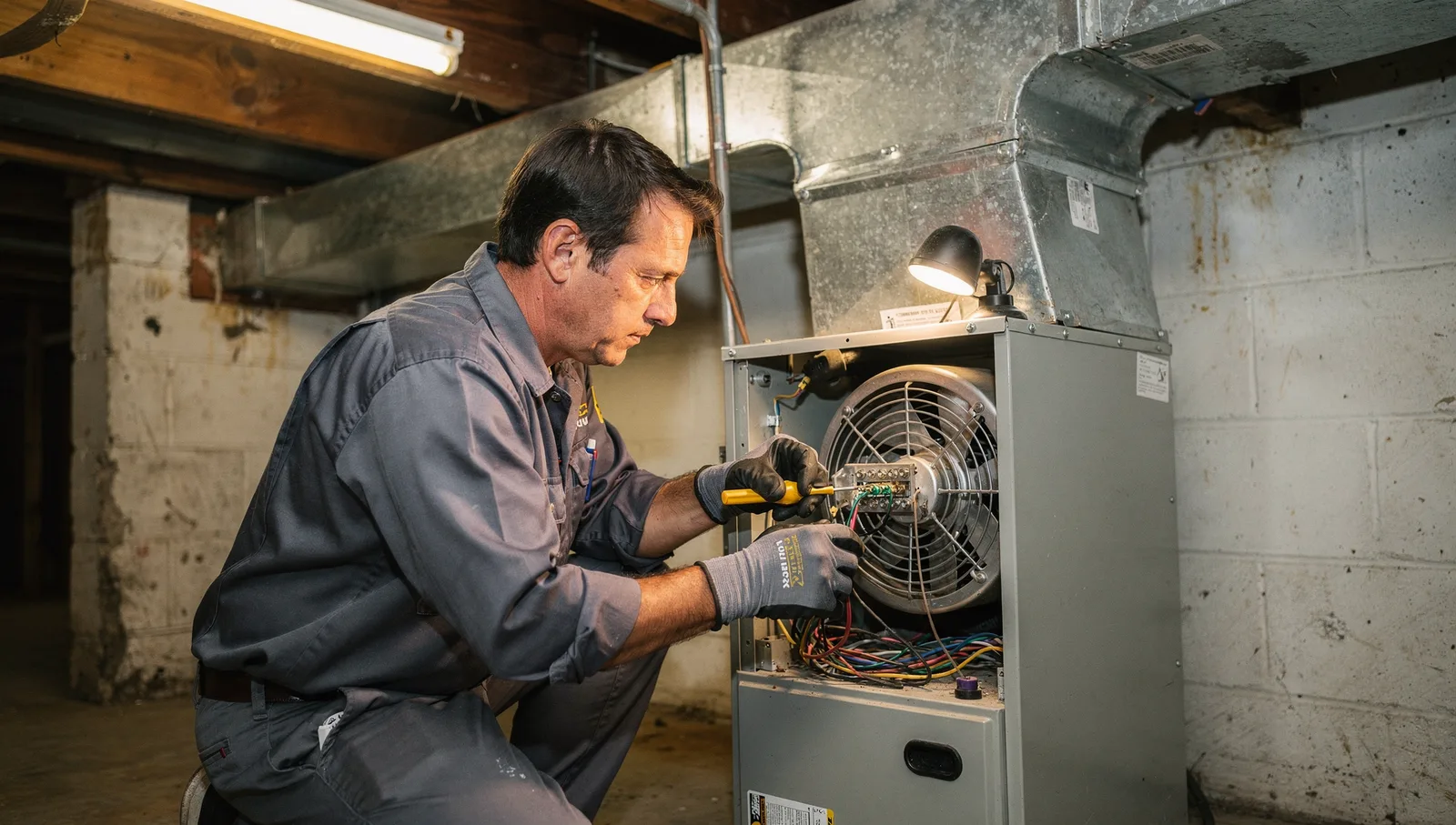
“Lubricate all moving parts. Parts that lack lubrication cause friction in motors and increases the amount of electricity you use.”
ENERGY STAR, U.S. Environmental Protection Agency
A heating and cooling system can turn on every day, blow conditioned air, and still hide faults. A furnace or air conditioner can seem fine while it draws too much current, fights high duct static pressure, or runs with a dirty burner. Oak Grove Heating And Cooling provides residential and commercial HVAC inspections, repairs, and installations to catch these issues early.
You might be buying an older home, checking seasonal reliability, or living with uneven room temperatures. In each case, a professional HVAC inspection gives you a clear look at your equipment. It goes beyond checking that the thermostat clicks on. It tests the electrical draw, safety, moving parts, and airflow of the whole system.
- Thermostat & controls check
- Electrical & motor testing
- Airflow & static pressure
- Coils & refrigerant check
- Combustion safety audit
- Final written report
HVAC Inspection Scope: ACCA Standard 4 and the ENERGY STAR Checklist#
A full HVAC inspection measures electrical, airflow, refrigerant, and combustion values against the maker's specifications. It does not guess. The industry baseline for what a residential maintenance inspection must cover is ANSI/ACCA 4 QM, Maintenance of Residential HVAC Systems. It lists minimum tasks for inspecting, testing, and measuring electrical, controls, mechanical, venting, air distribution, and piping systems.
Why it matters: fixing faults found this way pays back. The U.S. Department of Energy estimates that finding and correcting faults with installation verification and monitoring tools can save 10% to 30% of system energy use (energy.gov).
Electrical, Motor, and Static Pressure Airflow Testing#
Blower motor amp draw and static pressure tests show how hard your equipment works to move air. ENERGY STAR lists the core check-up tasks: check thermostat settings, tighten electrical connections, measure motor voltage and current, and lubricate moving parts (energystar.gov). In ENERGY STAR's words: "Lubricate all moving parts. Parts that lack lubrication cause friction in motors and increases the amount of electricity you use." Loose wiring can cause unsafe operation and shorten the life of major parts.
The technician also tests the ducts. A manometer reading in inches of water column measures total external static pressure and the pressure drop across each component (energystar.gov). Static pressure is the resistance the fan pushes against. The static pressure tip must face straight into the airflow, or the reading is wrong.
Packaged and rooftop units need a different method, because the factory filter and coil sit inside the cabinet. The technician measures pressure where air enters the unit and where it leaves. The technician then adds the two readings together to get total external static pressure (energystar.gov). When resistance climbs, the blower draws more current, bills rise, and heat builds up inside the motor.
Condensate Drain Line Inspection, Refrigerant Subcooling and Superheat, and SEER2 Efficiency#
Cooling checks focus on coils, drainage, and the sealed refrigerant loop. ENERGY STAR calls for a condensate drain inspection on central air conditioners, heat pumps, and furnaces to prevent water damage and humidity problems (energystar.gov). A clogged trap can back water into finished rooms or trip the overflow float switch.
Coil condition controls how well heat leaves your home. Cooling maintenance includes cleaning the evaporator and condenser coils (energystar.gov).
The technician also checks the refrigerant level and adjusts it if needed (energystar.gov). ENERGY STAR notes that too much or too little refrigerant makes the system less efficient and shortens equipment life. A wrong charge drags the unit below its rated SEER2 efficiency.
- Too much refrigerant raises head pressure and overworks the compressor.
- Too little refrigerant cuts cooling capacity and can ice the coil.
- Recording refrigerant subcooling and superheat lets the technician verify the charge with numbers, not guesswork.
- Some public maintenance specs, such as the City of Redmond's, require written records of leak testing, leak rates, and refrigerant added or recovered (redmond.gov).
Heat Exchanger Crack Inspection and Carbon Monoxide Testing#
Gas and oil furnaces need the strictest checks, because a fuel or combustion fault is a fire and health hazard. ENERGY STAR lists the heating tasks: check all gas or oil connections, gas pressure, burner combustion, and the heat exchanger (energystar.gov). Faulty fuel connections are a fire hazard.
A dirty burner or a cracked heat exchanger causes poor burner operation (energystar.gov). Either one means unsafe operation and lower efficiency. That is why a heat exchanger crack inspection and carbon monoxide testing belong in every heating-season visit.
If combustion readings drift from the maker's specs, or wiring shows heat damage, call for HVAC Services help. A technician can find the weak spot before it becomes a no-heat call in January.
Inspection Reporting and Service Contracts#
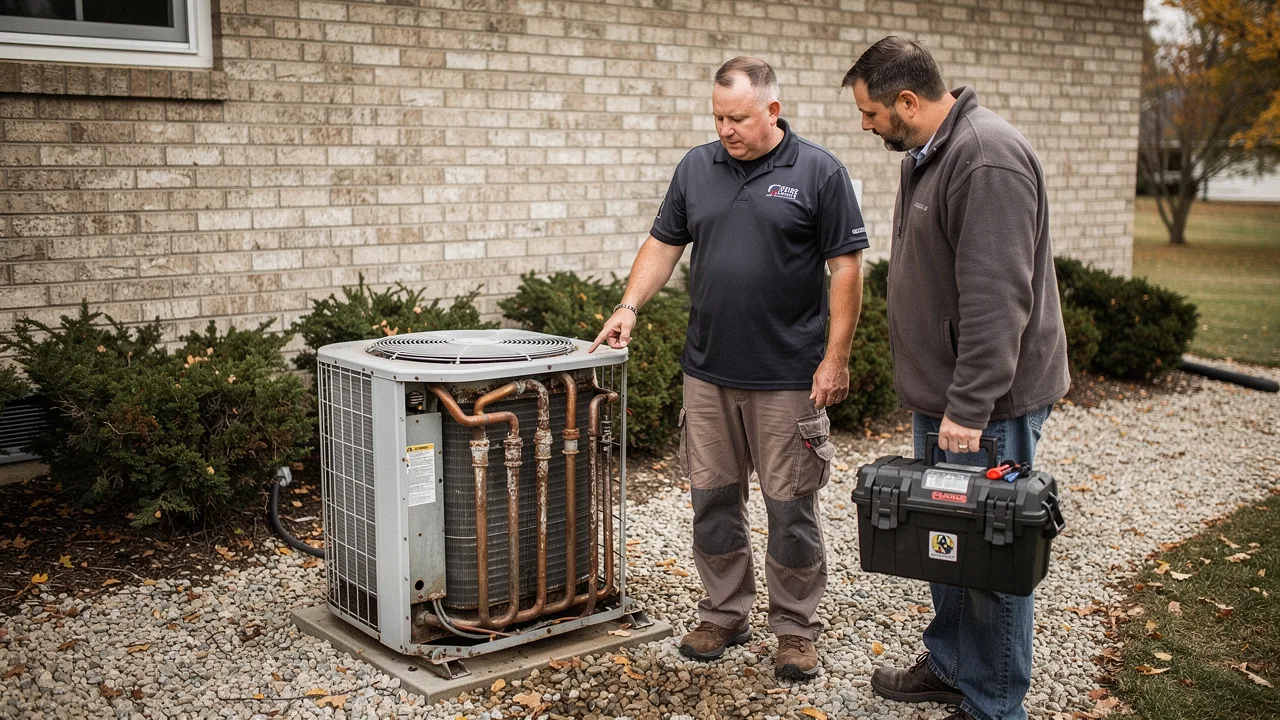
A real inspection ends with a written report, not a verbal "looks fine." The report is what you use to plan repairs, budget a replacement, or negotiate on a home purchase. Public contracts show the standard. Hays County's maintenance contract requires a report listing findings, materials replaced, and the work order number (sanmarcostx.gov).
A good condition report records:
- Model and serial numbers, system age, and rated heating or cooling capacity.
- The visible condition of the evaporator coil, condenser coil, electrical parts, and duct connections, with photos.
- A priority ranking that separates urgent safety items from items that can wait.
- Clear next steps for budgeting if the system is near the end of its life.
Ask to see a sample report before you book. If a contractor cannot show one, expect a checklist with ticks and no measurements.
Many homeowners use a service agreement instead of single visits. The U.S. Consumer Product Safety Commission notes that contractor service contracts typically include an annual inspection and some routine maintenance, such as cleaning or filter changes, plus repair coverage (cpsc.gov). Scheduled visits get done before summer and winter peaks, when contractors are busiest.
HVAC Inspection, Tune-Up, and Diagnostic Pricing#
What you pay depends on the visit: a routine tune-up, a condition report for a home sale, or a diagnostic for a failure. Angi puts general HVAC inspections at $70 to $500, depending on system type, home size, and location (angi.com).
Single-component checks cost less. Angi lists furnace inspections at $80 to $100 and air conditioner inspections at $75 to $150 (angi.com). A full condition assessment with measurements and a written report sits higher in Angi's overall range.
Locally, preventive tune-ups in Howell, MI cost $98 to $293, with an average of $196 (fizbo.me).
| Service Visit Type | Typical Price | What You Get | Source |
|---|---|---|---|
| Standalone AC Inspection | $75 to $150 | Filters, coils, vents, refrigerant level | Angi (angi.com) |
| Standalone Furnace Inspection | $80 to $100 | Filters, fans, burners | Angi (angi.com) |
| General HVAC Inspection | $70 to $500 | Varies by system type, home size, and location | Angi (angi.com) |
| Howell, MI Tune-Up | $98 to $293 (avg $196) | Local preventive maintenance | Fizbo (fizbo.me) |
| Diagnostic Trip Fee | $130 to $150 | Finds the cause on a failed system | Sears Home Services (searshomeservices.com) |
For a failed system, contractors charge a diagnostic or trip fee first. Sears Home Services says its diagnostic fee is typically $130 to $150 for most HVAC systems, billed on the day of service (searshomeservices.com). The fee covers the visit and the diagnosis before any parts and labor quote.
HVAC Inspection Appointment Workflow#
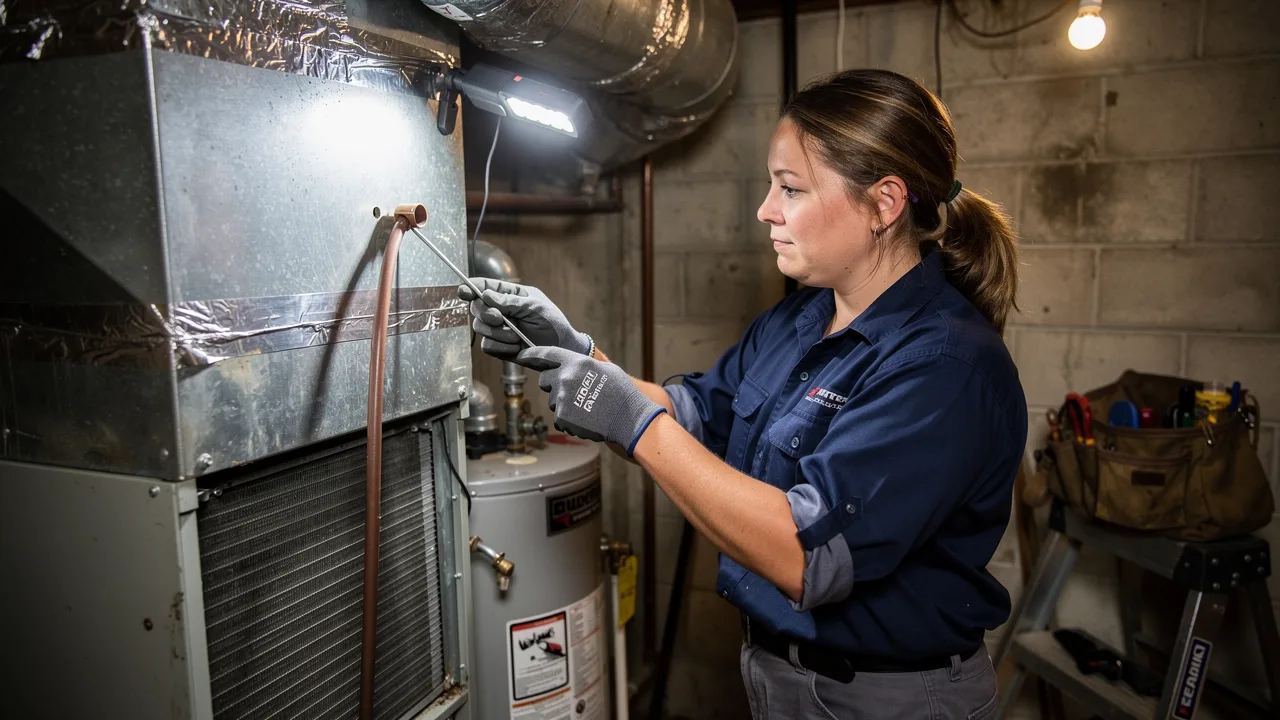
An inspection visit follows a fixed order, from controls to combustion, so nothing gets skipped. An inspection documents rather than cleans, and a visit that ends after a few minutes cannot include the measurements below.
The technician starts by asking about comfort problems, noise, or hot spots. Then the visit moves through each part:
- Startup and thermostat check: The technician calls for heat or cooling and confirms the controls engage in the right order.
- Cabinet and blower review: Power goes off. The technician opens the panels, checks the filter, clears debris, and checks the blower wheel.
- Electrical and motor testing: Terminals get tightened, run capacitors get checked, and motor amps get measured under load.
- Static pressure readings: Probes go into test holes on each side of the coil and filter, with the tip facing into the airflow.
- Combustion or refrigerant cycle check: On furnaces, burners, flue draft, and the heat exchanger. On air conditioners, refrigerant temperatures for subcooling and superheat.
- Findings review: Panels close, power returns, and you get the written checklist with photos and ranked recommendations.
Our view: step 4 is the one most often skipped, and it is the one that explains most comfort complaints. Ask for the static pressure numbers in your report.
Howell, MI HVAC Labor Rates, Service Call Fees, and Permit Costs#
In Howell, labor rates, call-out fees, and permits set the cost of any follow-up work an inspection finds. Knowing the local numbers helps you judge a quote. Hourly HVAC contractor rates in Howell typically run $75 to $150 per hour, while Michigan as a whole typically falls in the $65 to $135 per hour range (hvac-cost-guide.com). The first service call or diagnostic fee in Howell usually costs $75 to $200.
Larger jobs bring permits. Permit and inspection requirements in Howell can add $50 to more than $500 to an HVAC project (hvac-cost-guide.com). The permit confirms the work meets mechanical and electrical codes. If an inspection points to a replacement, ask whether the quote includes the permit.
For broader context, published HomeAdvisor and Angi data compiled for Howell puts HVAC maintenance at $15 to $824 and emergency HVAC service at $165 to $3,850 (hvacservice.io). The gap between those two ranges is the case for inspecting before something fails.
Booking an HVAC Inspection in Howell, Brighton, or Fenton#
Booking takes one call, and a little prep makes the visit faster and the quote more accurate. Before you call:
- Find the rating labels on your furnace, air handler, or outdoor unit. Note the model number and age.
- Write down what you have noticed: weak vents, rattles, or a jump in your energy bill.
- Check reviews and confirm the company holds state licensing and insurance.
- Say which visit you need: a routine tune-up, a condition report for a home sale, or a diagnostic for a failure. In Howell, a preventive tune-up typically costs $98 to $293 (fizbo.me).
Oak Grove Heating And Cooling has delivered residential and commercial HVAC services since 1995. Customers rate us an average of 4.8 stars. Our technicians handle furnace repair, AC repair, system replacements, and indoor air quality. We serve homeowners in Howell, Brighton, and Fenton.
Next step: call Oak Grove Heating And Cooling to book a seasonal inspection or a diagnostic check-up, and ask for a report that includes static pressure, refrigerant, and combustion readings.
| Service Visit Type | Typical Price | Source |
|---|---|---|
| Standalone AC Inspection | $75 to $150 | Angi |
| Standalone Furnace Inspection | $80 to $100 | Angi |
| General HVAC Inspection | $70 to $500 | Angi |
| Howell, MI Tune-Up | $98 to $293 | Fizbo |
| Diagnostic Trip Fee | $130 to $150 | Sears Home Services |
| Question | Answer |
|---|---|
| How much does an HVAC inspection cost? | $70 to $500 overall per Angi, depending on system type, home size, and location. |
| What is checked? | Controls, electrical, motors, static pressure, condensate drain, refrigerant, combustion, and heat exchanger (ENERGY STAR). |
HVAC Inspection Cost & Energy Savings Estimator
Estimates the total cost of an HVAC inspection based on system configuration and duct scope, and calculates projected annual utility savings and payback period resulting from identifying and rectifying operational inefficiencies (e.g., airflow restrictions, refrigerant subcooling/superheat adjustments, electrical amp draw faults).
Estimated Inspection & Diagnostic Fee:
Projected Annual Energy Savings:
Estimated Payback Period:
Frequently Asked Questions
How much does an HVAC inspection cost?
Angi puts a professional HVAC inspection at $70 to $500, depending on system type, home size, and location. Furnace checks average $80 to $100 and air conditioner checks $75 to $150 (Angi).
What is an HVAC system check?
An HVAC system check covers thermostat settings, electrical connections, motor voltage and current, lubrication of moving parts, the condensate drain, refrigerant level, and duct static pressure. On furnaces it adds gas connections, gas pressure, burner combustion, and the heat exchanger (ENERGY STAR).
How much is a tune-up in Howell, MI?
A preventive HVAC tune-up in Howell, MI typically costs $98 to $293, with an average of $196 (Fizbo). Call Oak Grove Heating And Cooling to book one.
What do HVAC services include?
HVAC services include seasonal tune-ups, inspections, diagnostic troubleshooting, refrigerant leak testing and charging, combustion safety checks, repairs, filter changes, and system replacements.
What is included in an HVAC inspection?
A professional HVAC inspection checks the thermostat and control sequences, cabinet, filter, and blower wheel. It tests electrical draw and motor amp draw, tightens wiring, and measures duct static pressure. For air conditioners, the inspection reviews coils, the condensate drain, and refrigerant levels using subcooling and superheat. For furnaces, it covers fuel connections, burners, flue draft, the heat exchanger, and carbon monoxide testing. The visit concludes with a written condition report.
Disclaimer
This content is general information about heating, cooling, and HVAC systems and is not a substitute for an on-site diagnosis. Contact Oak Grove Heating and Cooling for advice specific to your system.
Sources
- Optimizing Residential HVAC Performance Using Quality Installation Verification and Monitoring Tools | Department of Energy - energy.gov (2017-10-25)
- Service Contracts for Residential Heating, Ventilation, and Air Conditioning (HVAC) Equipment - cpsc.gov (2021-07-26)
- Maintenance Checklist | ENERGY STAR - energystar.gov (accessed 2026)
- RFP 2026-P06 HVAC - Preventative Maintenance & Repair Services, Countywide Page 1 of 48 - sanmarcostx.gov (2026-01-08)
- Addendum 2- HVAC Inspection and Maintenance IFB Revision - redmond.gov (accessed 2026)
- Measure and Interpret Static Pressures - energystar.gov (accessed 2026)
- How Much Does an HVAC Inspection Cost? [2026 Data] | Angi - angi.com (2023-11-16)
- HVAC Repair Estimate | Sears Home Services Diagnostic Fee Information - searshomeservices.com (accessed 2026)
- HVAC Services in Howell, MI | Top Rated Contractors - hvacservice.io (2026-04-01)
- Howell HVAC Prices - Estimates & Local Contractors - Hvac Cost Guide (accessed 2026)
- HVAC Tune-Up & Maintenance in Howell, Michigan | Cost & Guide - fizbo.me (accessed 2026)
- ACCA announces ANSI approval for reaffirmation of ACCA 4 QM-2019 (R2024) - acca.org (accessed 2024)