
HVAC Vent Cleaning Services: Costs & Standards (2026)
Short answer
Choose professional HVAC vent cleaning services that follow established mechanical standards, requiring thorough labor rather than quick sweeps. Legitimate services typically cost between $450 and $1,000 per system according to the EPA. Technicians must isolate ductwork under negative air pressure, extract source debris from coils and plenums, and verify cleanliness using objective standard testing rather than superficial visual checks.
Source: Oak Grove Heating And Cooling, https://oakgroveheatingandcooling.com/blog/hvac-vent-cleaning-services
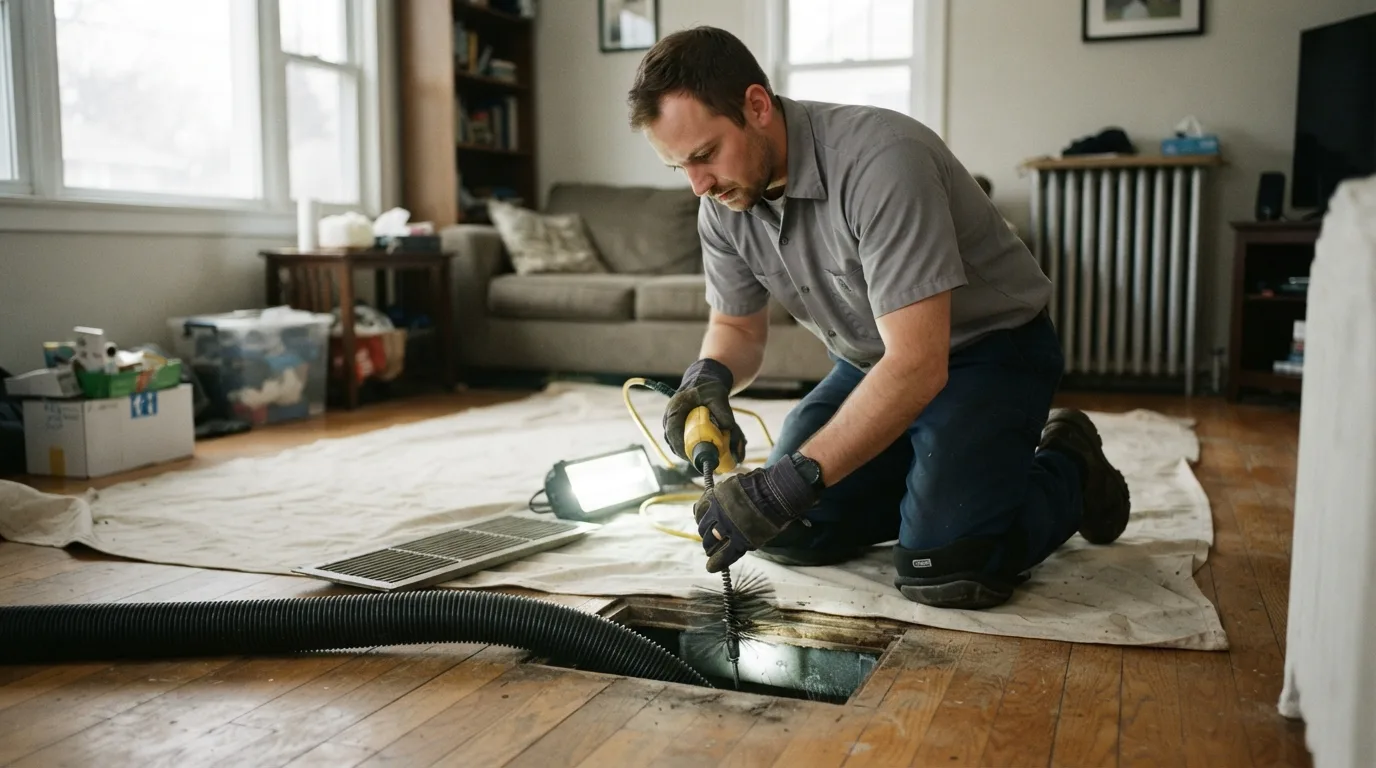
Your home heating and cooling system moves thousands of cubic feet of air every day, pulling dust, pet dander, and debris through hidden ductwork. When airflow slows or dust starts piling up around supply registers, professional HVAC vent cleaning services become an important consideration. A proper cleaning requires several hours of careful mechanical extraction to protect your equipment and restore airflow.
- System inspection
- Containment setup
- Negative air vacuuming
- Mechanical agitation
- Cleanliness verification
What components and procedures are involved in professional HVAC vent cleaning?#
A standard professional cleaning service addresses the entire air path, rather than merely vacuuming the register grills you see on your floors and walls. To protect occupants during duct cleaning, the National Institutes of Health (NIH) Division of Occupational Health and Safety recommends using containment barriers and negative air machines fitted with high-efficiency filters (ors.od.nih.gov). Sealing the work zone prevents loose particulate matter from blowing back into living areas while technicians agitate interior duct surfaces.
The NIH Division of Occupational Health and Safety also advises placing a filter over supply and return grilles to trap dust when the HVAC system resumes operation after cleaning (ors.od.nih.gov). This practice catches any lingering particles dislodged during the process before they can circulate through the house.
- Source removal to mechanically extract physical debris from duct surfaces
- Ambient air cleaning to scrub surrounding air during service
- Wet cleaning for components requiring liquid washing agents
- Power washing for heavy deposits on durable metal assemblies
- Steam cleaning for specialized restoration needs
When are HVAC duct inspections performed, and how is cleanliness verified?#
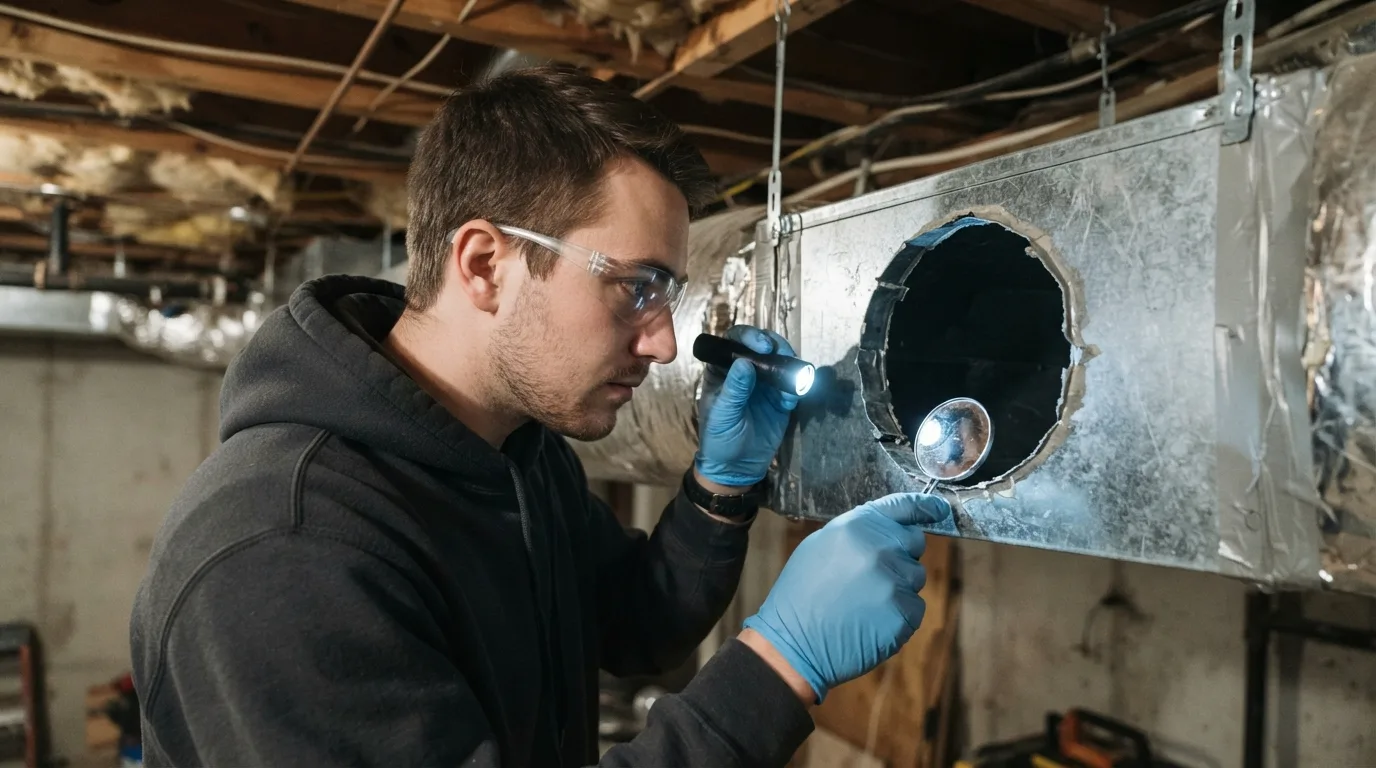
System inspections should be scheduled before and after HVAC cleaning and restoration projects under the NADCA ACR Standard (ductandvent.com). Initial inspections determine whether contamination actually warrants a complete cleaning, helping homeowners avoid unnecessary work. Post-cleaning inspections confirm that the air-handling components and supply trunks meet clear cleanliness criteria before the system is turned back on.
HVAC duct inspections may also be performed as part of a proactive energy management program (ductandvent.com). Regular checks identify buildup on heat exchangers and blower components before severe airflow bottlenecks develop.
When questions arise regarding whether a system truly needs cleaning, technicians turn to objective diagnostic procedures. Under the NADCA ACR Standard, cleanliness testing methods include the Surface Comparison Test and the NADCA Vacuum Test (nadca.com; ductandvent.com). These standardized evaluations ensure that cleaning success is measured by verifiable surface tests rather than guesswork or vague visual claims.
How do HVAC vent and duct cleanings correlate with airflow, static pressure, and system efficiency?#
When supply ducts and return plenums accumulate thick layers of debris, the blower motor must work harder to push conditioned air through restricted passages. As noted in technical trade documentation, standard residential equipment equipped with permanent split capacitor (PSC) blower motors is typically designed and rated for an external static pressure of 0.50 inches of water column (hvacknowitall.com). Operating above this static pressure threshold strains the motor, reduces comfort, and wastes electrical energy.
Cleaning restricted systems directly restores airflow delivery. Research published in an academic evaluation reports airflow delivery recovery rates of 10% to 46% after duct cleaning (mdpi.com). Furthermore, a one-year comparative study found that regular cleaning increased air flow velocities by up to 12%.
Restoring unrestricted airflow translates directly into household utility savings. As reported by the National Air Duct Cleaners Association, cleaning lightly fouled HVAC systems can yield energy savings of 5% to 11% (searsclean.com). When heavily contaminated systems are thoroughly restored, energy savings can reach 15% to 30%. In the broader context of building efficiency, a one-year comparative study documented that regular cleaning led to energy savings ranging from 16.2% to 71.4% in evaluated applications (mdpi.com). Proper airflow management across the blower motor and evaporator coil is essential to maintaining overall mechanical performance.
What do HVAC vent cleaning services typically cost, and how are prices determined?#
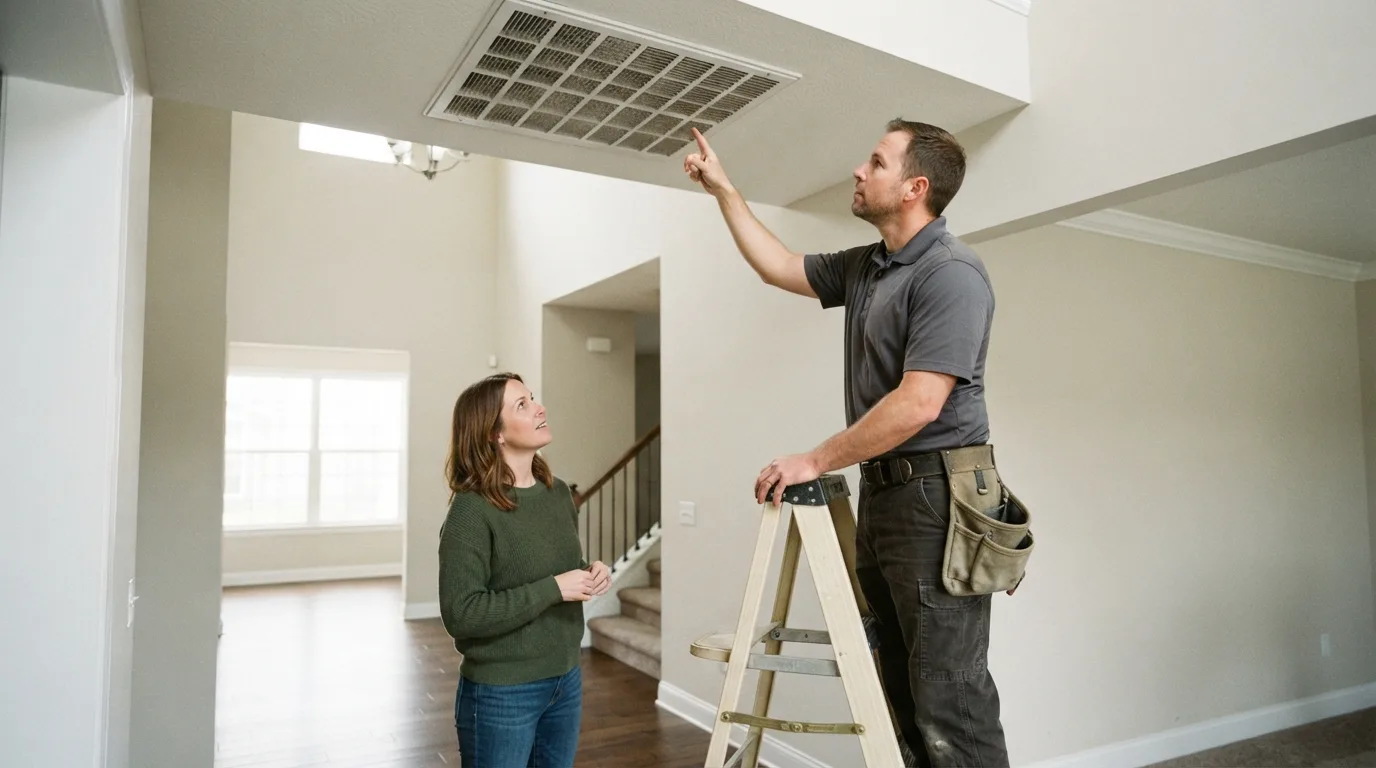
Legitimate air duct cleaning services typically range in cost from $450 to $1,000 (epa.gov) per heating and cooling system, according to the U.S. Environmental Protection Agency (EPA). Total project pricing depends on several factors, including:
- The accessibility of the ductwork and whether vents are located in floors or high ceilings
- The physical square footage of the home and the overall layout
- The total number of supply and return vents connected to the air handler
Professional ductwork cleaning labor rates typically range from $90 to $125 per hour (angi.com), with most jobs requiring three to eight hours of skilled labor. If an advertised price seems unusually low, consider the math: an experienced technician cannot spend four hours on-site with commercial vacuum equipment for double-digit rates without losing money.
Pricing is frequently calculated using per-vent estimates. Industry pricing guides note that cleaning air ducts averages around $35 (angi.com) per vent, which translates to an estimated $400 to $800 for a home with 16 vents. Broader regional ranges for legitimate duct cleaning often fall between $300 and $800 (lovingairinc.com) or more, scaling directly with vent counts and system complexity.
Evaluating common warning signs and deceptive practices in vent cleaning offers#
Understanding standard pricing benchmarks makes it easier to spot marketing tactics that take advantage of uninformed homeowners.
How low-cost introductory pricing and unverified add-on services operate#
Deceitful companies, known in the industry as "blow-and-go" operators, advertise rock-bottom pricing to hook customers before tacking on expensive, unnecessary services (wilx.com). These promotions frequently market flat rates of $49 to $99 (lovingairinc.com) for "unlimited vents," or quote full-service cleaning for under $150.
Once inside the home, these operators use high-pressure tactics. Technicians claim the ductwork harbors dangerous mold or heavy contamination, suddenly pushing the total price from the low introductory rate up to $500 to over $2,000 (lovingairinc.com; wilx.com). Legitimate remediation requires verified testing, not hasty on-site sales claims designed to force immediate add-on fees.
Identifying suspicious promotional listings and social media advertisements#
Fraudulent operators often market their services across neighborhood groups and local social media feeds. The Michigan Attorney General's office warns residents to watch for specific promotional red flags when reviewing online duct cleaning offers (wilx.com):
- Posts that explicitly insist the offer is not a scam, which often indicates deceptive intent
- Listings that completely omit a business name
- Advertisements using generic names like "Duct Cleaners Michigan" that cannot be verified on Google
- Social media accounts that are brand new, especially where the profile name fails to match the URL username
- Social media profiles that remain locked so that prospective customers cannot inspect previous posts, photos, or followers
Protecting your indoor air quality and heating equipment starts with transparent evaluations and verified work scopes. Homeowners in Howell, Brighton, and Fenton can protect their mechanical systems by insisting on documented inspections and realistic labor standards. Schedule an on-site system inspection with an established local heating and cooling contractor to review your ductwork, check blower performance, and ensure your system operates at peak efficiency.
| Operational Metric | Observed Change Following Cleaning | Operating Benchmark or Baseline Condition |
|---|---|---|
| Lightly Fouled System Energy Impact | 5% to 11% energy savings | Baseline lightly fouled heating and cooling equipment |
| Heavily Contaminated System Energy Impact | 15% to 30% energy savings | Baseline severe debris restriction in air path |
| Airflow Delivery Recovery Rate | 10% to 46% recovery improvement | Airflow reduction ≥15% or dust loading >9.0 g/m² |
| System Static Pressure Benchmark | Restores normal operational pressure | 0.50 in. w.c. rated external static pressure (PSC blower motors) |
| Metric | Figure | Source |
|---|---|---|
| Air duct cleaning services typically range in cost from $450 to $1,000 per… | $450 to $1,000 | www.epa.gov |
| To protect building occupants during duct cleaning, the NIH Division of… | negative” air machines equipped with… | ors.od.nih.gov |
| The NIH Division of Occupational Health and Safety advises placing a filter… | Place a filter over supply and return… | ors.od.nih.gov |
| Airflow delivery recovery rates of 10% to 46% are reported after duct cleaning. | 10 to 46% | www.mdpi.com |
| A one-year comparative study found that regular cleaning increased air flow… | up to 12% | www.mdpi.com |
| The NADCA ACR Standard includes cleanliness verification methods comprising… | Surface Comparison Test and NADCA… | nadca.com |
| The NADCA ACR Standard encompasses types of cleaning including source removal… | source removal, ambient air cleaning… | nadca.com |
| Deceitful 'blow-and-go' air duct cleaning companies use rock-bottom prices to… | rock bottom prices to hook customers… | www.wilx.com |
HVAC Vent & Duct Cleaning Cost Estimator
Estimates the cost and service duration for professional whole-home HVAC air duct and vent cleaning based on square footage, vent count, number of HVAC systems, and optional add-ons like dryer vent cleaning or antimicrobial fogging.
Estimated Total Cost:
Estimated Service Time:
Frequently Asked Questions
How long does duct cleaning take?
Professional air duct cleaning typically requires three to eight hours of labor for most residential jobs, depending on home size, duct accessibility, and duct material.
How much do HVAC vent cleaning services typically cost?
Legitimate duct cleaning typically ranges from $450 to $1,000 per HVAC system according to the EPA, with labor commonly billed at $90 and $125 per hour or roughly $35 per vent.
How much energy can clean HVAC ducts save?
Cleaning lightly fouled HVAC systems saves 5% to 11% in energy, while heavily fouled systems achieve 15% to 30% savings, accompanied by airflow delivery recovery rates between 10% and 46%.
How do technicians verify if air ducts need cleaning?
Under the NADCA ACR Standard, contractors use visual component evaluations alongside objective verification tests: Method 2 (Surface Comparison Test) and Method 3 (NADCA Vacuum Test).
Disclaimer
This content is general information about heating, cooling, and HVAC systems and is not a substitute for an on-site diagnosis. Contact Oak Grove Heating and Cooling for advice specific to your system.
Sources
- Should You Have the Air Ducts in Your Home Cleaned? | US EPA - epa.gov (2014-07-28)
- DOHS Fact Sheet On HVAC Duct Cleaning - ors.od.nih.gov
- How Much Does Air Duct Cleaning Cost? [2026 Data] - angi.com (2026-08-03)
- HVAC Duct Contamination and Its Impact on Energy Efficiency and Indoor Air Quality: Evaluation and Ranking of Inspection Methods Using Multi-Criteria Analysis - mdpi.com
- How Clean Air Ducts Improve Energy Efficiency and Lower Bills | The Clean Cut Blog | Sears Carpet & Air Duct Cleaning - searsclean.com (2025-02-15)
- HVAC Hygiene Services Market Research Report 2033 - dataintelo.com (2025-10-01)
- AG: Beware of air duct cleaning ‘blow-and-go’ scams - wilx.com (2023-12-12)
- NADCA Releases 2025 Edition of ACR, The NADCA Standard for Assessment, Cleaning and Restoration of HVAC Systems | National Air Duct Cleaners Association (NADCA) - nadca.com
- Static Pressure Testing: The One Measurement That Reveals Everything Wrong With an HVAC System | HVAC Know It All - hvacknowitall.com
- THE NADCA STANDARD - ductandvent.com
- How to Spot Duct Cleaning Scams | Loving Air Inc. - lovingairinc.com