
How much does it cost to replace a furnace and AC together?
Short answer
Replacing a furnace and air conditioner together typically costs $5,000 to $15,000 (Sears Home Services), with Pearl reporting a 2026 national median of $16,500 within a $5,000 to $28,000 installed range. SEER2 and AFUE efficiency tiers, home size, fuel type, and local labor move the price. Your next step is a written quote based on a Manual J load calculation for a matched, AHRI-listed system.
Source: Oak Grove Heating And Cooling, https://oakgroveheatingandcooling.com/blog/how-much-does-it-cost-to-replace-a-furnace-and-ac-together
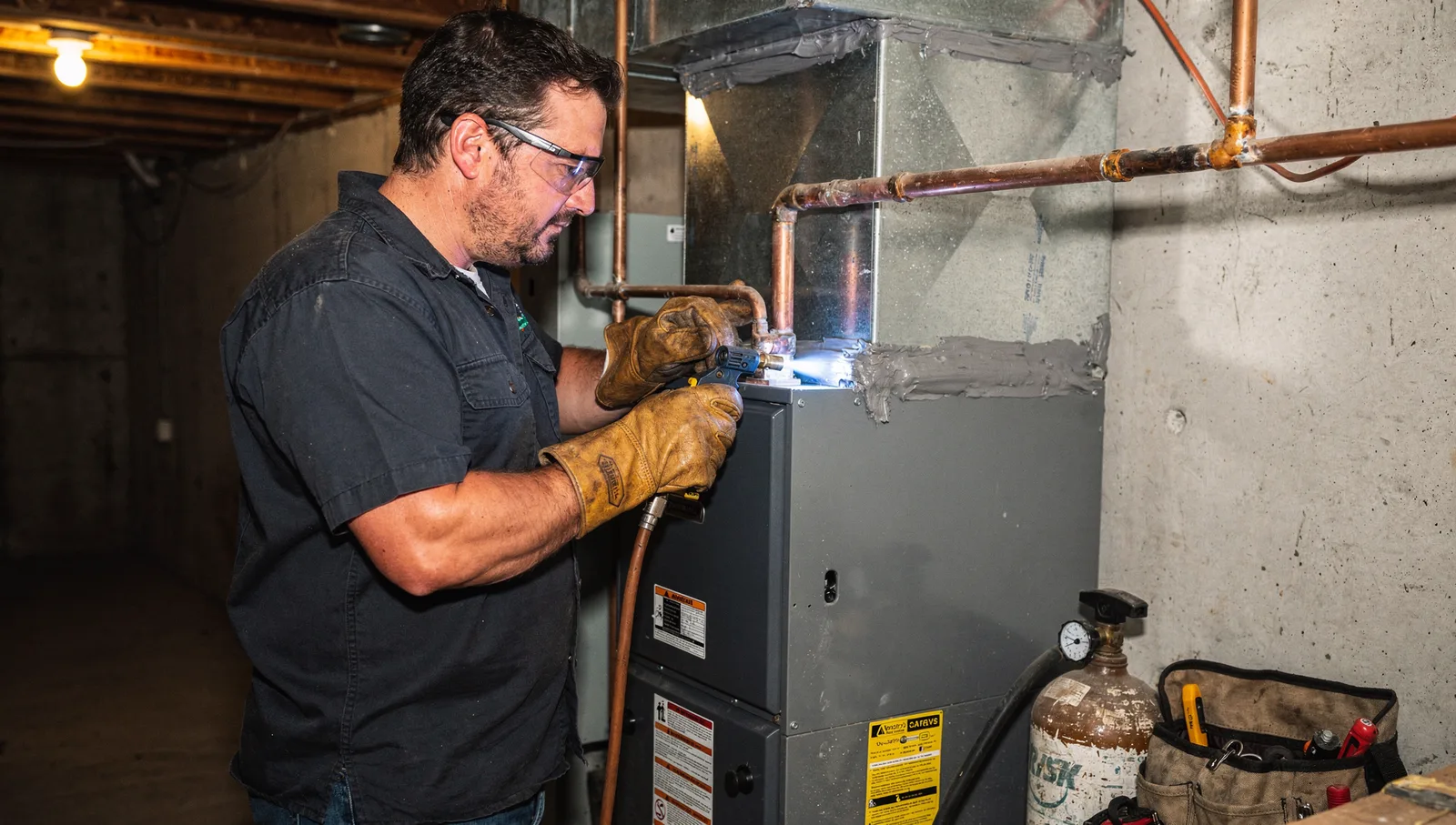
Replacing a furnace and air conditioner at the same time represents a major home investment. But staging them separately often duplicates non-equipment overhead like labor, permitting, and refrigerant line work. When one half of your heating and cooling system fails, swapping both units at once delivers a properly matched system that avoids hidden operational drag.
- Manual J Load Calculation
- Equipment Selection
- System Installation
- Static Pressure Verification
Average Cost Ranges to Replace a Furnace and AC Together#
Replacing a furnace and air conditioner at the same time typically costs between $5,000 and $28,000, (pearlscore.com) with a national median of $16,500 in 2026, depending on system efficiency, equipment type, and property dimensions, according to data published by Pearl.
- A paired mid-efficiency system averages around $8,000 (searshomeservices.com) within a standard range of $5,000 to $15,000, based on pricing data from Sears Home Services.
- Industry estimates compiled by Filterbuy in 2025 place the typical dual replacement cost between $5,000 and $14,000, (carrier.com) with a project average near $8,500 (filterbuy.com).
- Full heating and cooling replacements commonly land between $5,000 and $12,500, (armadillo.one) with many projects falling between $7,000 and $10,000 once labor and local permits are factored in, according to Armadillo.
- Standard-efficiency paired gas furnace and air conditioning packages typically span from $7,000 to $16,000 (myquoteiq.com) installed, per 2026 national market benchmarks from QuoteIQ.
- Regional contractor quotes can vary significantly. For example, contractor pricing from SwiftPro in Lorton, Virginia, ranges from $8,898 to $23,000 (goswiftpro.com) for a complete furnace and air conditioner package.
Installed Cost Comparison by Equipment Type and Fuel Source#
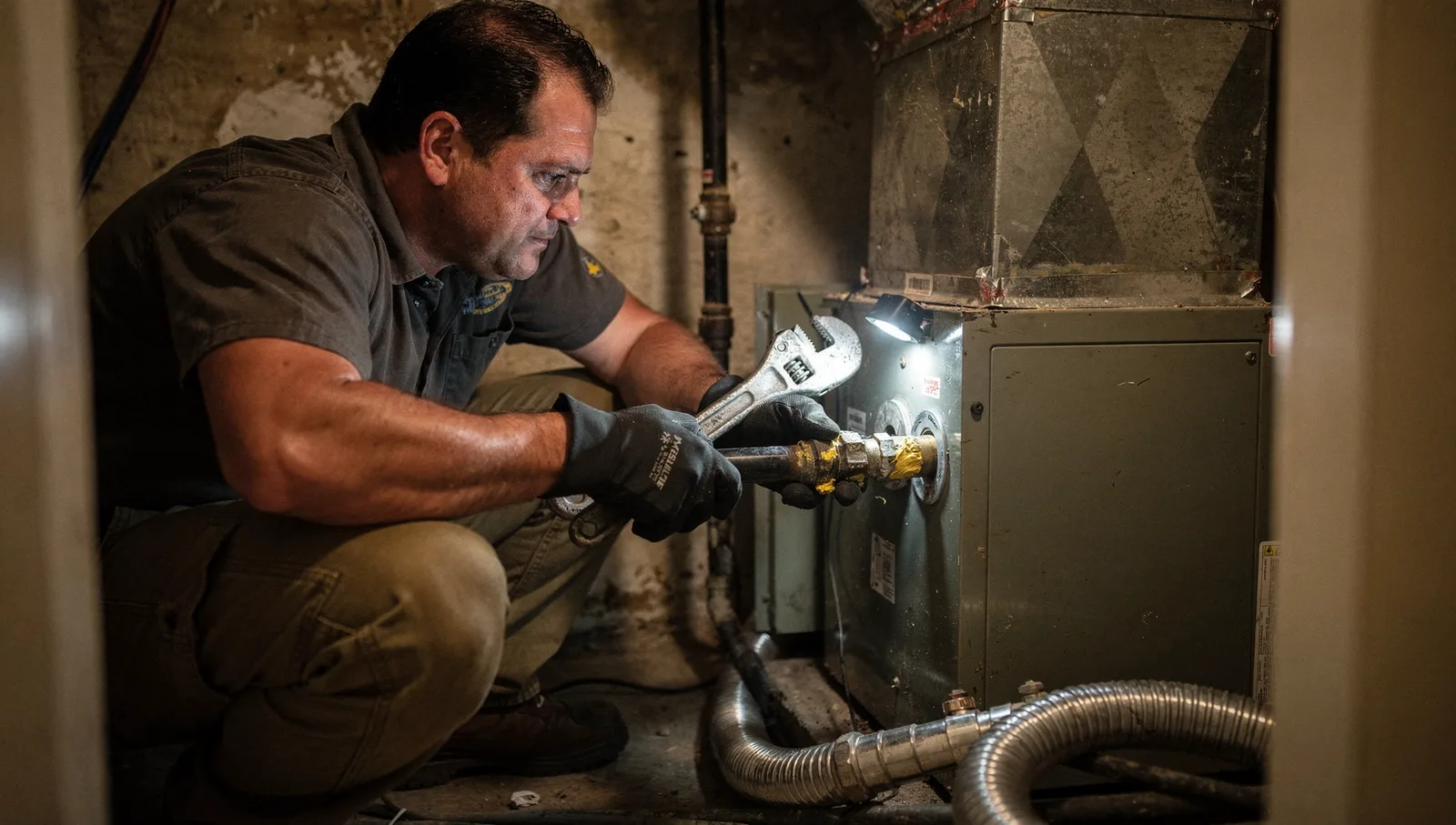
Evaluating the price of each unit on its own highlights why combined replacements provide better labor value than separate installations. According to Carrier's published pricing matrix, installing an individual gas furnace typically costs between $3,800 and $12,000, (carrier.com) while a standalone residential central air conditioner runs between $3,000 and $15,000.
| Equipment Category | Typical Installed Cost Range | Source |
|---|---|---|
| Gas Furnace | $3,800 to $12,000 | Carrier (carrier.com) |
| Oil Furnace | $2,500 to $10,000 | Carrier (carrier.com) |
| Central Air Conditioner | $3,000 to $15,000 | Carrier (carrier.com) |
| Ducted Heat Pump | $6,000 to $25,000 (bryant.com) | Carrier & Bryant (carrier.com) |
| Ductless Mini-Split Heat Pump | $2,000 to $7,000 per zone | Bryant (bryant.com) |
If a homeowner purchases a standard gas furnace at $3,800 (carrier.com) and later schedules an air conditioner replacement at $3,000, baseline equipment costs combine with duplicate labor overhead. Staging those projects years apart, however, requires paying two separate diagnostic fees, two installation truck dispatches, and two rounds of code compliance inspections.
Once your aging equipment begins requiring recurring repairs, that is the point to bring in HVAC Services help to assess a complete system swap.
Evaluating Dual-Fuel Heat Pump and Furnace Configurations#
A dual-fuel configuration pairs an electric heat pump with a traditional gas or oil furnace to optimize year-round utility consumption. Per the U.S. Environmental Protection Agency's ENERGY STAR program, this pairing gives homeowners the flexibility to heat their living spaces with either electricity or fossil fuels (energystar.gov).
The system logic selects which fuel source to run based on energy prices and outdoor weather conditions (energystar.gov). During moderate autumn and spring days, the electric heat pump provides energy-efficient warmth. When outdoor temperatures drop steeply during freezing midwinter stretches, the gas or oil furnace takes over the primary heating load to maintain indoor comfort.
A dual-fuel heating approach maximizes your home energy choices while maintaining heating capacity across all seasons.
A2L Refrigerant Rules: Why R-410A Systems Push a Matched Furnace and AC Replacement#
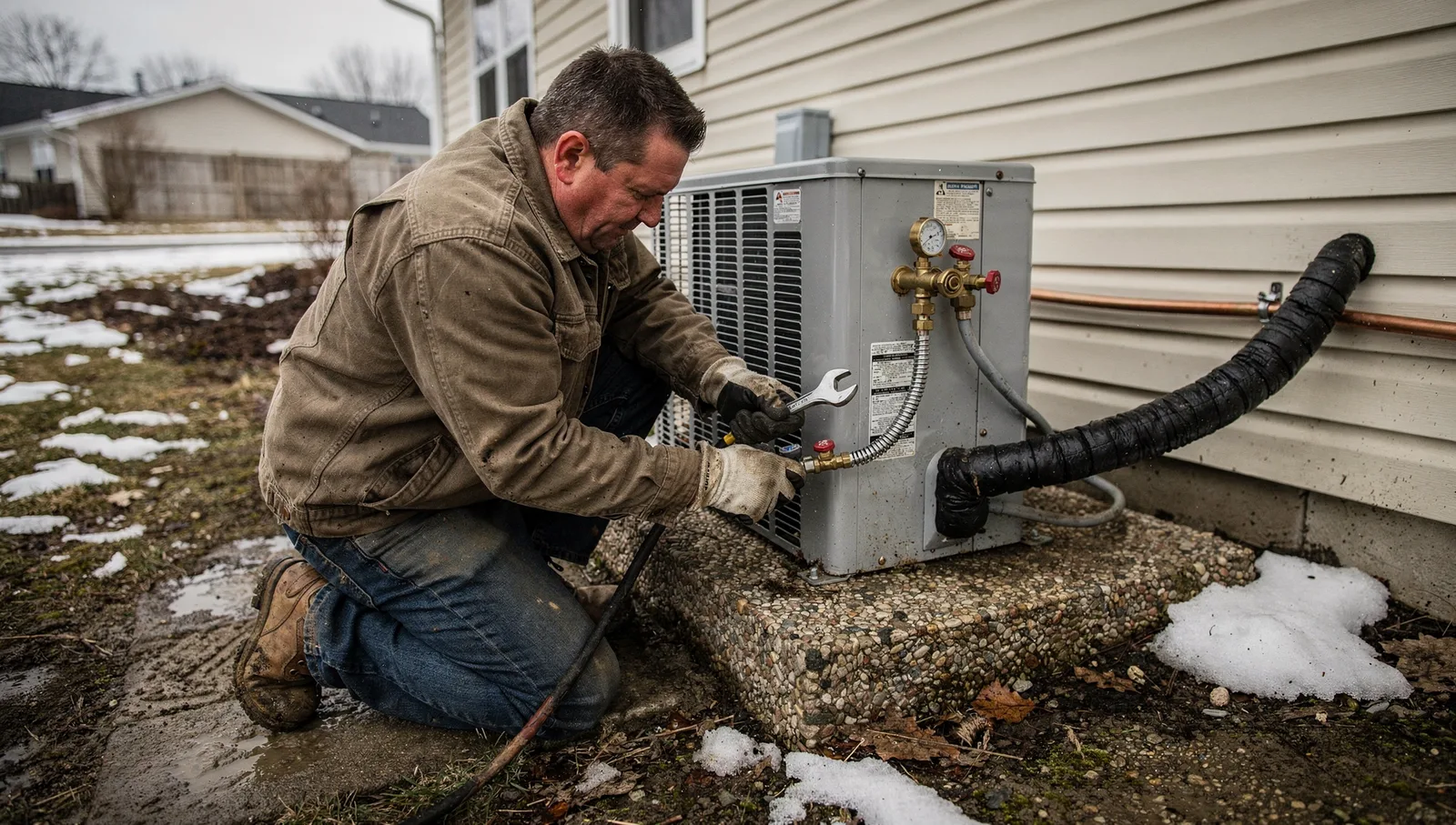
Environmental regulations under the American Innovation and Manufacturing (AIM) Act mandated that manufacturers transition residential air conditioning and heat pump systems to refrigerants with a global warming potential (GWP) of 700 or less beginning January 1, 2025 (energy.gov; epa.gov). An EPA amendment extended the installation window to January 1, 2026, for components manufactured or imported prior to January 1, 2025. While the EPA allows building owners to continue servicing, retrofitting, and replacing components on existing equipment, older units operating on R-410A or legacy R-22 will not be compatible with incoming low-GWP refrigerants, as noted by Lennox (lennox.com).
Modern replacements rely on mildly flammable A2L refrigerants, such as R-32 and R-454B (nctcog.org).
Furthermore, under the 2024 International Mechanical Code section 1101.7(4), switching equipment to a different refrigerant safety classification requires the system to satisfy the installation standards governing a brand-new setup (nctcog.org).
Testing Total External Static Pressure During System Replacement#
Total external static pressure (TESP) represents the total resistance to airflow that the indoor blower fan must overcome inside your ductwork. TESP is a key health indicator for ducted equipment, measured with a digital manometer (bsesc.energy.gov).
Evaluating static pressure during a system replacement involves a standard diagnostic procedure:
- Connect the specialized static pressure hoses directly to the input ports on a digital manometer (bsesc.energy.gov).
- Fasten the static pressure probes firmly onto the open ends of the pressure hoses.
- Insert the probes into dedicated test ports on the return and supply sides of the air handler to record working resistance and check the filter pressure drop.
Verifying these air pressures confirms that the newly matched blower and evaporator coil operate within the manufacturer's specified airflow thresholds.
How SEER2 and AFUE Efficiency Ratings Change the Price#
SEER2 Ratings for the Air Conditioner#
SEER2 is the Department of Energy's cooling efficiency rating, measured under test conditions with higher external static pressure than the older SEER test, so it reads closer to real ducted performance. A higher SEER2 unit costs more up front because it uses larger coils, variable-speed or two-stage compressors, and better controls. The gap between a code-minimum unit and a high-SEER2 variable-speed system is one of the biggest swings inside the price ranges above.
AFUE Ratings for the Furnace#
AFUE (annual fuel utilization efficiency) is the share of fuel a furnace turns into usable heat. High-efficiency condensing furnaces cost more than non-condensing units because they add a second heat exchanger, PVC venting, and a condensate drain. In a Michigan heating climate, the furnace AFUE usually matters more to your operating cost than the AC's SEER2.
Matched System Design, AHRI Pairing, and Warranty Validity#
A matched system is a furnace (or air handler), indoor evaporator coil, and outdoor condenser tested together and listed with a certified AHRI reference number. That AHRI listing is what proves the combined SEER2 rating, and utility rebates and manufacturer programs typically ask for it. Pairing a new outdoor unit with an old coil can leave the combination unlisted, lower real efficiency, and give the manufacturer grounds to limit warranty coverage. With A2L refrigerants, a new coil is usually required anyway, which is the strongest practical reason to replace the furnace and AC together.
Electrical Panel and Condensate Line Retrofit Costs#
Some replacements need work beyond the two boxes, and a good quote lists it as separate line items:
- Electrical panel and circuit work: a larger or variable-speed condenser, or a switch to a heat pump, can need a new breaker, heavier wire, or a new outdoor disconnect. Older panels without capacity may need an upgrade before the install.
- Condensate line and pump: moving to a condensing furnace adds a condensate drain, and basement installs without a floor drain need a condensate pump.
- Venting: high-efficiency furnaces vent through PVC, so the old metal flue may need to be abandoned or relined for a remaining water heater.
- Line set: A2L equipment often calls for a new or flushed refrigerant line set.
Federal Tax Credits: Inflation Reduction Act 25C Has Ended#
The Inflation Reduction Act's 25C Energy Efficient Home Improvement Credit no longer applies to new installs. ENERGY STAR states that these federal credits were available to homeowners through December 31, 2025, including 30% of costs up to $2,000 for qualifying heat pumps. Equipment installed in 2026 does not qualify, so check your utility for current rebates instead.
Next Steps: Get a Manual J Sized Quote for a Furnace and AC Replacement#
If your existing heating or cooling units are approaching the end of their operational lifespan, scheduling a full mechanical assessment is the most reliable way to prevent sudden breakdowns. An experienced technician can conduct a Manual J load calculation to size your heating and cooling equipment accurately, evaluate the airflow limitations of your duct system, and help you select an energy-efficient combination.
Property owners in Howell, Brighton, and Fenton can contact Oak Grove Heating And Cooling to review their equipment options, verify system compatibility, and secure a detailed project quote.
| Source | Typical Installed Cost Range | Reported Average or Median | Key Scope Notes |
|---|---|---|---|
| Pearl (2026 data) | $5,000 to $28,000 | $16,500 (median) | Full system replacement (AC + furnace), 15+ SEER2 |
| QuoteIQ (2026 data) | $7,000 to $16,000 | Not reported | Standard-efficiency full system (AC + gas furnace) |
| Sears Home Services (2026 data) | $5,000 to $15,000 | ~$8,000 | Mid-efficiency paired heating and cooling system |
| Filterbuy (2025 data) | $5,000 to $14,000 | ~$8,500 | Bundled furnace and AC replacement |
| Armadillo (2025 data) | $5,000 to $12,500 | $7,000 to $10,000 | Full HVAC system replacement including heating and cooling |
| SwiftPro (Regional contractor quote) | $8,898 to $23,000 | Not reported | Installed gas furnace and AC together in Lorton, VA |
| Equipment Category | Installed Cost Range | Energy or Refrigerant Standard | Primary Application & Compatibility Notes |
|---|---|---|---|
| Gas Furnace | $3,800 to $12,000 | 80%+ AFUE benchmark | Standalone indoor unit; pairs with central AC or dual-fuel heat pumps |
| Oil Furnace | $2,500 to $10,000 | Traditional combustion | Alternative heating fuel source for homes without natural gas |
| Central Air Conditioner | $3,000 to $15,000 | 15+ SEER2; GWP ≤ 700 standard | Requires matched indoor evaporator coil; cannot drop A2L refrigerant into legacy R-410A units |
| Ducted Heat Pump | $6,000 to $25,000 | 15+ SEER2; GWP ≤ 700 standard | Whole-home heating and cooling; can create dual-fuel setup with a furnace |
Furnace & AC Bundled Replacement Cost Estimator
Estimates the total bundled replacement cost for a paired furnace and air conditioner based on home square footage (tonnage estimation), efficiency tier, and ductwork readiness, while projecting bundle savings versus installing separately.
Estimated Bundled Replacement Cost:
Estimated Savings vs. Separate Replacement:
Frequently Asked Questions
How much does it cost to replace a furnace and AC together?
Replacing a furnace and AC together spans $5,000 to $28,000 across industry sources, with national medians and averages commonly landing between $8,000 and $16,500 depending on system efficiency, sizing, and contractor scope.
Is it cheaper to buy a furnace and AC together?
Yes. Bundling the installation is almost always cheaper than replacing each unit separately because it eliminates duplicate labor overhead, permitting costs, site preparation, and separate service trips.
What is the average cost to replace an entire HVAC unit?
A complete HVAC replacement typically costs $5,000 to $12,500 according to Armadillo, with many projects falling between $7,000 and $10,000 installed, though total costs can climb higher depending on home size and system complexity.
Disclaimer
This content is general information about heating, cooling, and HVAC systems and is not a substitute for an on-site diagnosis. Contact Oak Grove Heating and Cooling for advice specific to your system.
Sources
- DUCT RETROFIT DECISION GUIDE - bsesc.energy.gov
- Air-Source Heat Pumps - energystar.gov
- Test Procedure for Central Air Conditioners and Heat Pumps - energy.gov
- New Furnace Cost in 2026: Average Prices, Installation Fees & Savings Guide - searshomeservices.com
- HVAC Replacement Cost | System Pricing & Installation Guide - carrier.com
- Homeowner's Guide to the 2025 New Refrigerant Transition | Lennox - lennox.com
- Furnace and AC Replacement Cost: Smart Savings When You Bundle Your HVAC System Installation with Filterbuy HVAC Solutions - filterbuy.com (2025-12-16)
- How Much Does a New HVAC System Cost in 2026? | Pricing Guide - bryant.com
- Questions and Answers for the upcoming change for Low GWP ... - nctcog.org
- Free HVAC Cost Calculator (2026) | QuoteIQ Free Tools - myquoteiq.com (2026-07-27)
- Goswiftpro - goswiftpro.com (2026-10-28)
- Armadillo - armadillo.one (2026-04-09)
- Average HVAC Replacement Cost: 2026 Data, Cost Factors, and… | Pearl - pearlscore.com (2026-05-28)