How much does a new furnace and air conditioner cost in Michigan?
Short answer
A new furnace and air conditioner in Michigan typically costs between $5,200 and $14,500 installed. Your exact price depends on home size, equipment efficiency, and local labor rates. Bundling both units together usually saves substantial labor expenses compared to replacing them one at a time. High-efficiency systems cost more up front, but utility rebates from DTE, Consumers Energy, and state clean-energy programs can significantly lower your final out-of-pocket expense.
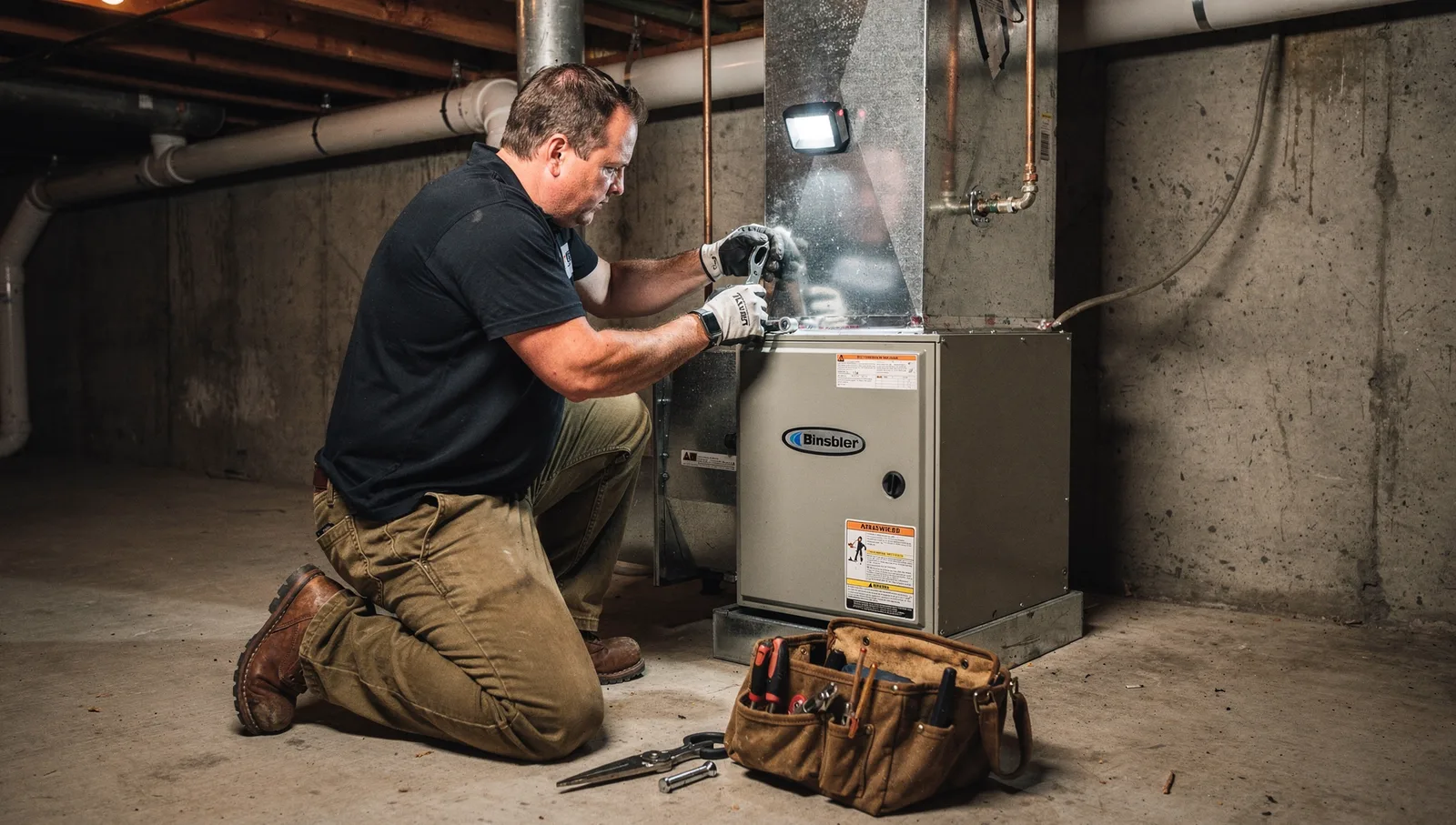
A freezing Michigan January or a humid July afternoon is the worst time to discover your heating and cooling system has reached the end of its life. If your equipment is struggling to keep up, you are likely wondering what a full replacement will run you.
Getting both units updated at the same time is one of the largest investments you will make in your home. The good news is that understanding where the costs come from can help you make a smart, budget-conscious choice.
- In-Home Load Calculation
- Select Equipment Efficiency
- Coordinate Utility Rebates
- Full System Installation
Average Cost of a New Furnace and Air Conditioner in Michigan#
A combined gas furnace and central AC system replacement in Michigan typically ranges from $5,200 to $14,500 (hvacprojectcost.com). This pricing typically applies to a combined gas furnace and central air conditioner system replacement.
Where your home lands within that range depends on several mechanical factors:
- The physical heating and cooling capacity required to condition your living space.
- The baseline energy-efficiency ratings of the chosen furnace and condenser.
- Any required structural modifications, such as updated electrical wiring or flue venting adjustments.
Basic single-stage equipment sits at the entry-level end of the spectrum, while high-efficiency, multi-stage systems command the upper tier.
Bundled HVAC Replacement Versus Individual System Purchases#
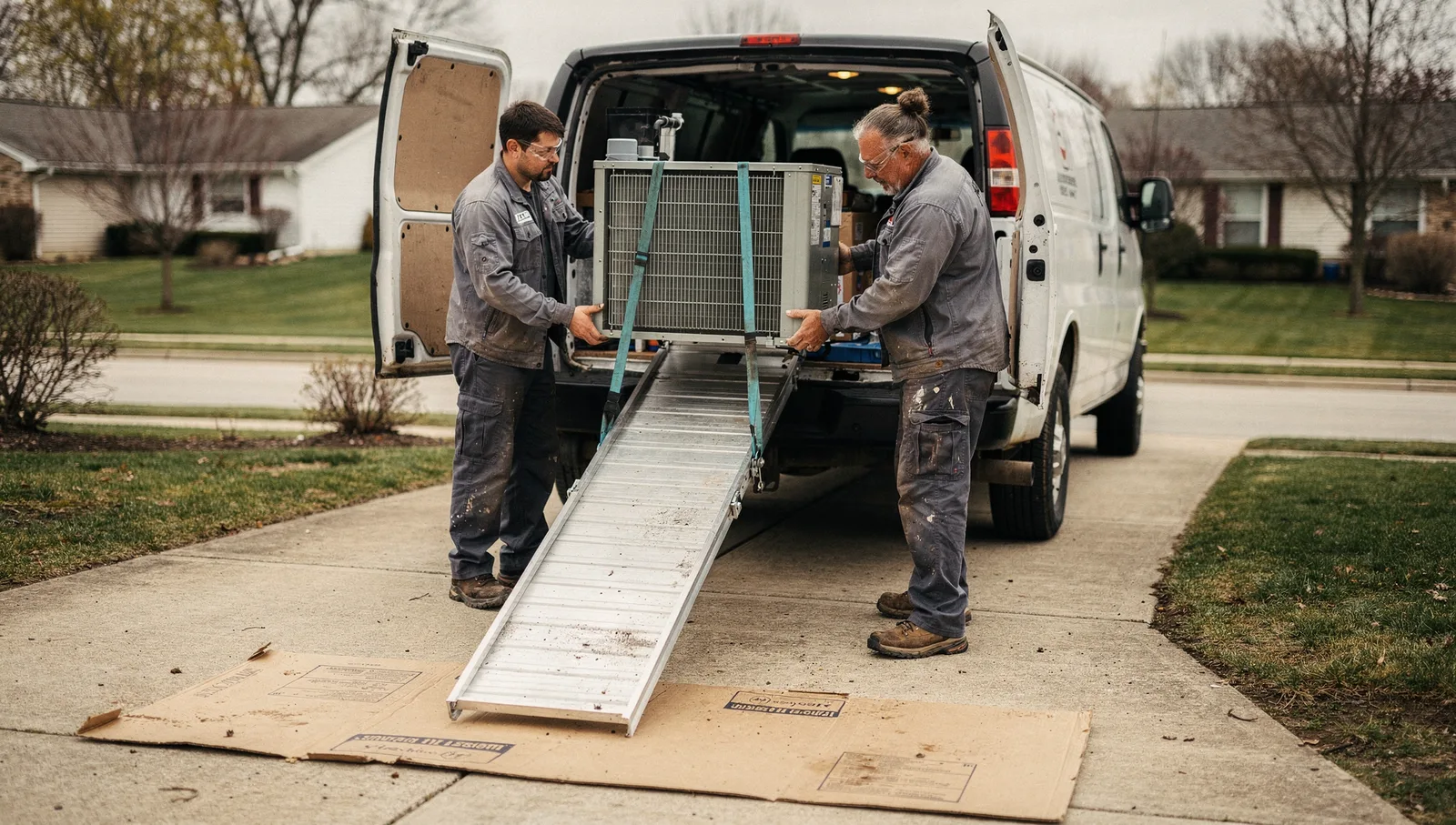
Purchasing a furnace and an air conditioner together is almost always cheaper than buying them as standalone projects. Across Michigan, installing a gas furnace and central AC together costs between $5,200 and $14,500, (hvacprojectcost.com) with local contractor benchmarks placing typical paired installations between $8,800 and $10,900 (jkheat.com).
By contrast, tackling these upgrades piecemeal carries a distinct price penalty. Central AC installed alone generally ranges from $3,800 to $9,000 (hvacprojectcost.com). A standalone gas furnace installation runs from $3,000 to $9,500, while statewide furnace replacement costs in Michigan average between $5,800 and $10,200 installed.
| Purchase Type | Michigan Statewide Range | Typical Regional Paired Benchmark |
|---|---|---|
| Combined Furnace and AC System | $5,200 to $14,500 (hvacprojectcost.com) | $8,800 to $10,900 (jkheat.com) |
| Central AC Replacement Only | $3,800 to $9,000 (hvacprojectcost.com) | $5,000 to $8,500 (jkheat.com) |
| Gas Furnace Replacement Only | $3,000 to $9,500 (hvacprojectcost.com) | Not paired |
Buying both units at once allows an installer to share logistical overhead, connect matched coils seamlessly, and complete the installation in a single visit. For homeowners wondering, "Is it cheaper to buy a furnace and air conditioner at the same time?", the standalone totals clearly illustrate the savings of bundling.
Regional Price Variations Across Michigan Metro Areas#
Your physical location inside the state plays a substantial role in your final installation invoice. Detroit metro HVAC installations typically run 10% to 20% (hvacprojectcost.com) higher than the Michigan statewide average.
Localized furnace replacement figures demonstrate these municipal gaps clearly:
- Westland: The typical cost range to replace a furnace is $1,452 to $1,762.
- Lansing: A furnace installation generally runs between $5,700 and $10,000 installed (modernize.com).
- Ann Arbor: Most furnace replacements range from $5,900 to $10,200 installed.
Municipal permitting processes, local inspection standards, and distinct housing architectures across older neighborhoods all contribute to these geographic shifts.
Labor Expenses and Regional Wage Differences in Michigan#
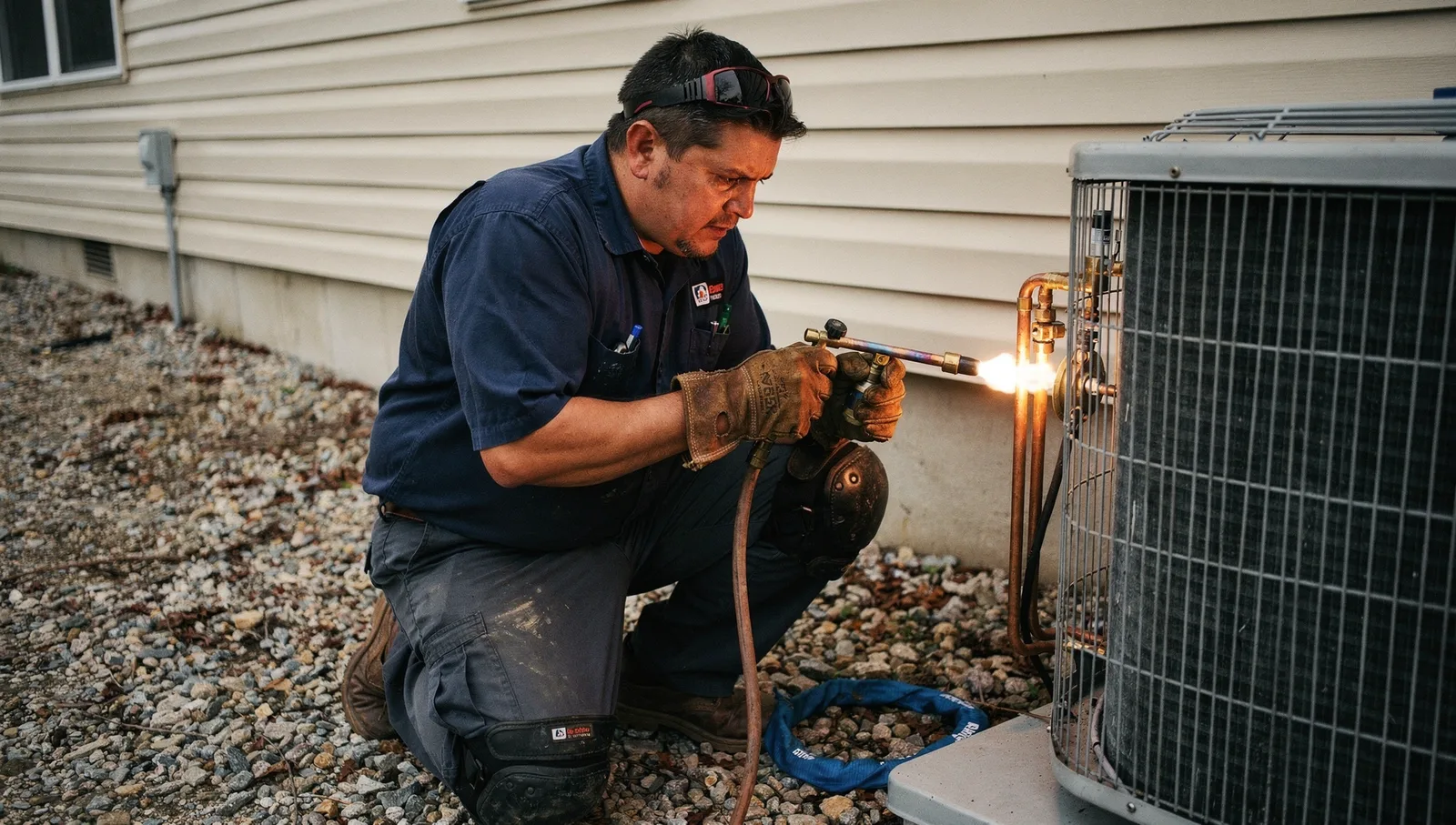
Labor makes up a share of any heating and cooling contract, and technician compensation varies based on where the work occurs. In May 2022, heating, air conditioning, and refrigeration mechanics and installers in the Balance of Lower Peninsula of Michigan nonmetropolitan area earned an hourly mean wage of $24.02 (bls.gov).
Trade compensation directly drives regional installation bids. Urban centers with dense union representation often see higher overall installation labor rates than rural nonmetropolitan counties.
Efficiency Ratings and Standards for Michigan Heating and Cooling#
Operating efficiency dictates your monthly utility expenses and sets baseline equipment manufacturing requirements. Under federal testing standards, new central air conditioners installed in Michigan must meet a minimum efficiency rating of at least 13.4 SEER2 (jkheat.com).
SEER2 stands for Seasonal Energy Efficiency Ratio 2, a standardized metric that measures total cooling output divided by electrical energy consumed across an entire cooling season. Units with higher SEER2 ratings reduce summer power draw, though they require a larger upfront investment at purchase.
Equipment Sizing and Load Calculation Guidelines#
Correct equipment sizing ensures your system runs reliably without short-cycling or struggling in extreme temperatures.
To protect long-term comfort, contractors must avoid shortcuts. Sizing a heating and cooling system correctly relies on careful load engineering rather than rule-of-thumb guesswork:
- Manual J Load Calculations: This process establishes the precise capacity required by examining wall insulation, window orientations, surface areas, and air leakage (northernonehour.com).
- Rule-of-Thumb Limitations: Informal estimates, like assigning one ton per 500 square feet or 50 BTU per square foot, serve only as rough shortcuts that risk severe over-sizing.
- Simplified Component Modeling: Basic estimates might add 100 BTU per occupant, 1,000 BTU per window, and 1,000 BTU per exterior door to building surface and ceiling calculations, but they do not replace a full heat load analysis (fieldvibe.com).
Precision engineering ensures the equipment maintains correct dehumidification cycles while preventing premature mechanical wear.
Drainage and Venting Factors for Condensing Furnaces in Cold Climates#
Modern high-efficiency furnaces generate significant moisture as they extract heat from combustion exhaust. These condensing furnaces produce up to 5 to 6 gallons of water per day, which creates a serious risk of frozen drain lines during severe Michigan cold snaps (onehourcomfort.com).
Proper slope is vital to keep this acidic water moving safely out of the house. Where gravity drives condensate flow, building codes require a minimum slope of 1% (equivalent to 1/8-inch per foot) (betterbricks.com). A steeper slope of 2% (1/4-inch per foot) remains preferred whenever surrounding physical space allows.
Careful venting routing and insulated condensate lines prevent heating lockouts on the coldest nights of the year.
State and Utility Energy Rebate Programs in Michigan#
Targeted energy incentives can lower your upfront project expenses considerably. Additionally, the Home Electrification and Appliance Rebates (HEAR) program offers up to $8,000 (dhvac.com) for qualifying heat pumps for households earning up to 150% of Area Median Income, with total household caps reaching $14,000.
Navigating Michigan heating and cooling upgrades is fundamentally about stacking available incentives:
- Identify high-efficiency equipment packages that meet specific performance criteria.
- Layer eligible HEAR or HOMES state-level incentives with utility rebates from providers like Consumers Energy or DTE (filterbuy.com).
- Finance any remaining project balance through low-interest options like Michigan Saves.
Remember that federal rules prevent double-funding the same single upgrade across two separate federal programs, making coordinated planning essential (filterbuy.com).
Take the Next Step on Your Home Comfort#
When you are planning a system replacement, taking action before your old equipment breaks down gives you time to compare configurations calmly.
Follow these practical steps to prepare your home this week:
- Request an in-home load assessment: Make sure your contractor performs an ACCA Manual J calculation rather than relying on square-footage guesswork.
- Review bundled options: Request paired estimates for replacing both the furnace and the air conditioner together to avoid separate labor charges later.
- Verify efficiency and drainage: Confirm your cooling unit meets the 13.4 SEER2 baseline and check that condensing drain slopes are planned for freezing weather.
- Compile your utility incentives: Contact your local electric and gas utilities to pre-qualify for active equipment rebates.
Oak Grove Heating And Cooling provides professional heating and cooling services across Howell, Brighton, Fenton, Hartland, Milford, South Lyon, Wixom, and Fowlerville. Schedule an on-site consultation to review your equipment options and secure an accurate estimate tailored to your home.
| Equipment Type | Manual S Sizing Limitation | Design Purpose |
|---|---|---|
| Gas Furnace | 100% to 140% of total heating load | Ensures adequate winter heat output without excessive oversizing |
| Central Air Conditioner | Up to 115% of total cooling load | Prevents short-cycling and maintains effective indoor dehumidification |
| Heat Pump | 115% or 125% of total cooling load | Matches seasonal cooling and mild heating requirements |
| Supplemental Electric Heat | Based on equipment balance point | Supplements heat pump output during severe cold weather |
| Dual-Fuel Heating System | 100% to 140% of total heating load | Provides balanced fossil-fuel backup capacity during low outdoor temperatures |
| Incentive Program | Maximum Value | Target System or Scope | Qualification Criteria |
|---|---|---|---|
| HOMES (Home Owner Managing Energy Savings) | Up to $20,000 per household | Whole-home efficiency improvements, including heating and cooling | Based on modeled home energy savings and household income |
| HEAR (Home Electrification and Appliance Rebates) | Up to $8,000 (part of $14,000 household cap) | High-efficiency electric heat pumps | Households earning up to 150% of Area Median Income (AMI) |
| Utility Rebates (Consumers Energy & DTE) | Varies by measure and fuel type | High-efficiency heat pumps, central AC, and heating systems | Participating contractor installation and utility customer status |
| Michigan Saves | Financing on remaining balance | Qualified residential energy and heating/cooling installations | Approved credit through participating lenders |
Michigan HVAC Replacement Cost Estimator
Estimates the total bundled replacement cost for a combined furnace and central air conditioning system in Michigan based on home square footage, equipment efficiency tier, ductwork/venting adjustments, and potential utility and federal tax rebates.
Estimated Total Installed System Cost:
Estimated Rebates & Federal Tax Credits:
Net Out-of-Pocket Cost:
Estimated Monthly Payment (if financed):
Frequently Asked Questions
What is the average cost of replacing a furnace in Michigan?
Standalone furnace replacement across Michigan averages between $5,800 and $10,200 installed, while individual estimates statewide span $3,000 to $9,500 depending on location, efficiency, and market conditions.
Disclaimer
This content is general information about heating, cooling, and HVAC systems and is not a substitute for an on-site diagnosis. Contact Oak Grove Heating and Cooling for advice specific to your system.
Sources
- Heating, Air Conditioning, and Refrigeration Mechanics and Installers - BLS (2026-10-09)
- Adding a Mini Split AC System in Michigan | Costs, Rebates & 2026 Guide - Filterbuy (2026-10-09)
- Furnace Replacement in Westland, MI - Costs 10 / 2026 - homeyou - Homeyou (2024-01-05)
- Furnace Cost in Michigan | Modernize Home Services - Modernize (2025-11-18)
- HVAC Sizing Manual J: Why Bigger Isn't Better in Minnesota | Northern One Hour - Northernonehour (2026-10-09)
- Condensing rooftop unit installation and best practices guide - Betterbricks (2026-10-09)
- Reviewing HVAC Designs for Compliance with ACCA Manual S - ICC - Media (2026-10-09)
- jkheat.com (via Perplexity sonar-pro) - Jkheat (2025-06-18)
- Manual J HVAC load calculator | Simple online HVAC tool by FieldVibe - Fieldvibe (2026-10-09)
- dhvac.com (via Perplexity sonar-pro) - Dhvac (2026-09-30)
- How to Keep the Furnace Condensate Line from Freezing - Onehourcomfort (2026-10-09)
- Michigan HVAC Replacement Cost (2026) | Pricing Guide - Hvacprojectcost (2026-10-09)