Does homeowners insurance cover emergency furnace or AC replacement?
Short answer
Standard homeowners insurance covers emergency furnace or AC replacement only when sudden, accidental damage results from a covered peril listed in the policy, such as fire, lightning, windstorms, or burst pipes. It does not cover breakdowns caused by age, lack of maintenance, or normal wear and tear. Furthermore, an insurer may pay only for repairs rather than a full replacement; an HVACi report found that half of HVAC equipment in claims could be repaired.
Source: Oak Grove Heating And Cooling, https://oakgroveheatingandcooling.com/blog/does-homeowners-insurance-cover-emergency-furnace-or-ac-replacement
“If a unit fails during a record-breaking heat wave as the result of age, excessive use or normal mechanical failure, insurance typically won't cover the replacement.”
Angelica Leicht, Senior Editor, Managing Your Money, CBS News
A freezing winter night or a humid summer afternoon is the worst time to discover your heating or cooling system has died. When faced with an unexpected breakdown, many homeowners wonder if their insurance policy will step in to buy a brand-new unit.
The short answer depends on what caused the damage. Standard property coverage protects against sudden, catastrophic disasters, not normal mechanical failure.
When Homeowners Insurance Covers Furnace or AC Replacement#
Standard homeowners insurance pays to repair or replace an HVAC system when damage results from a sudden, accidental peril listed in the policy, such as a fire, lightning strike, windstorm, hail, falling objects, or certain water events like a burst pipe, once the policy deductible is met (cbsnews.com). Per Ready.gov, citing the Insurance Information Institute, homeowners policies generally list malfunctioning heating, air conditioning, plumbing, and sprinkler systems among potential covered perils (ready.gov).
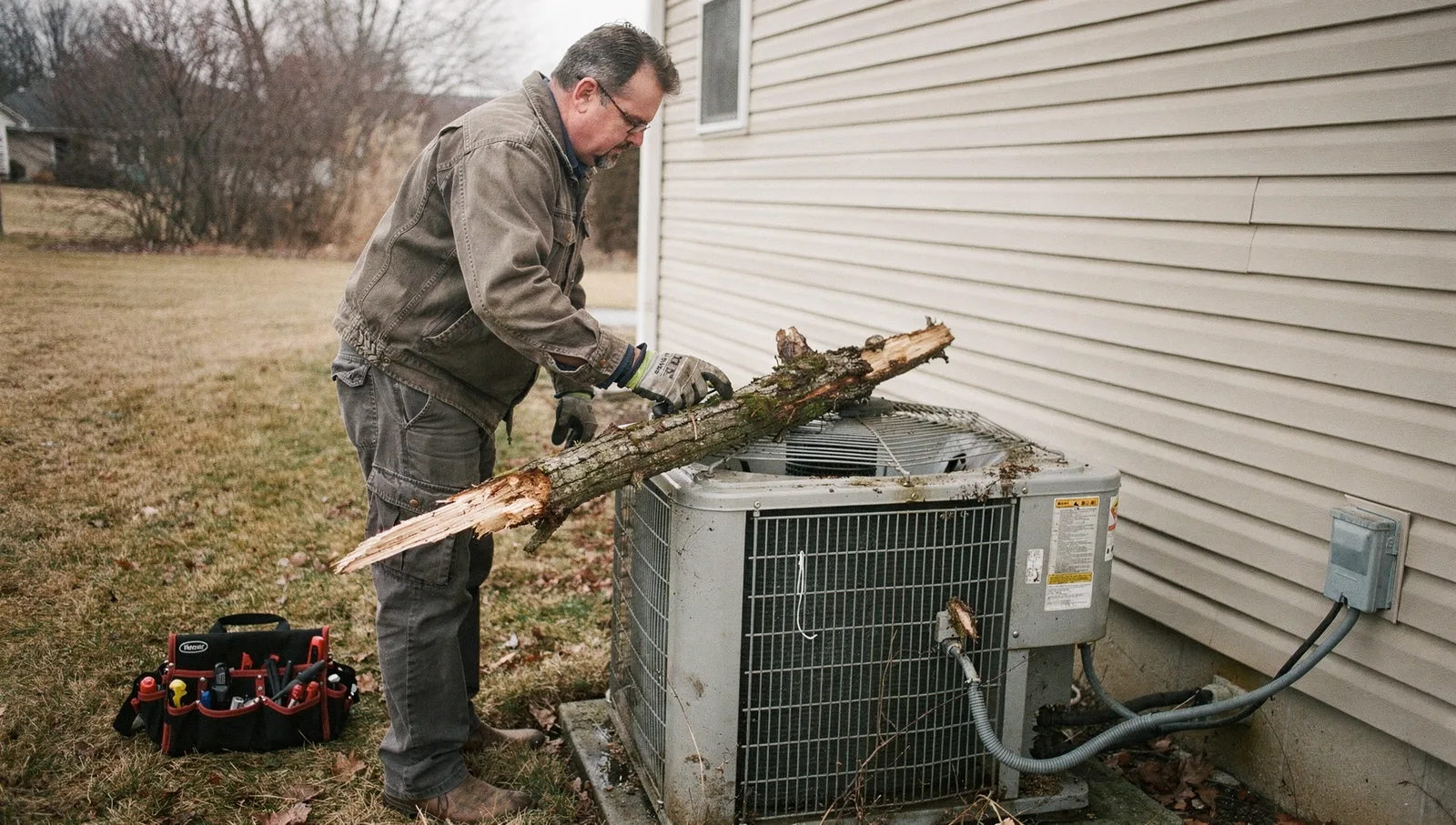
Coverage applies only when the loss stems from an unexpected external accident rather than age or system fatigue (cbsnews.com). In these scenarios, the insurer evaluates the damaged equipment under the dwelling coverage portion of your policy. If a lightning surge destroys the compressor or a tree limb crushes the outdoor condenser, an adjuster can authorize funds to restore the equipment to working order after you pay your out-of-pocket deductible.
HVAC Exclusions: Wear, Tear, and Maintenance Issues#
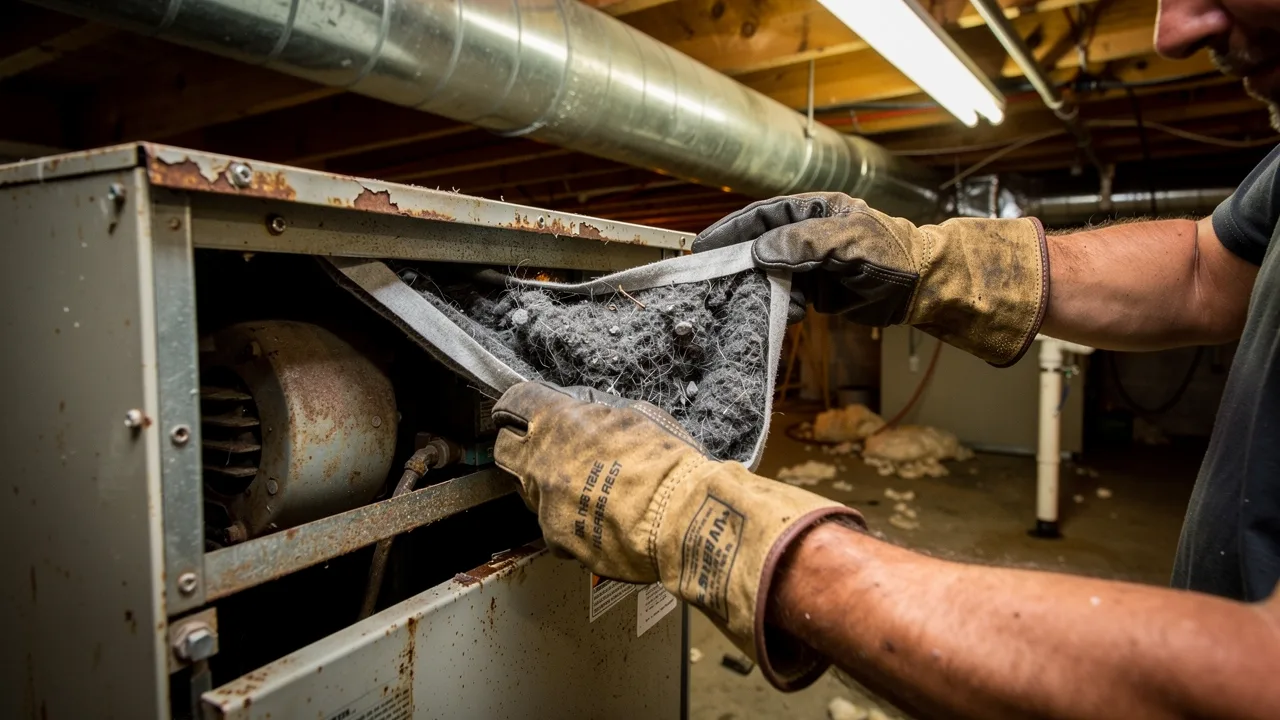
Standard homeowners policies do not pay for HVAC replacement caused by gradual wear and tear, aging, neglect, or lack of proper maintenance (insuranceopedia.com). Insuranceopedia notes that insurers will not cover the repair or replacement of a furnace if its failure stems from poor upkeep. Everyday deterioration over time is considered an ordinary homeowner responsibility rather than a sudden, insurable accident.
A standard policy also excludes basic mechanical breakdowns, such as a faulty blower motor or an electrical short within the unit (insuranceopedia.com). If an air conditioner stops working during a prolonged heat wave simply because of age, excessive use, or mechanical failure, insurance typically will not cover the replacement (cbsnews.com). Policies also exclude damage caused by rust and gradual corrosion.
Equipment Breakdown Endorsements and Mechanical Failure#
Because standard policies exclude mechanical failure-as detailed above-many insurers allow policyholders to add an optional equipment breakdown endorsement to bridge this protection gap (nerdwallet.com; insuranceopedia.com). Adding equipment breakdown coverage ensures that mechanical failures of essential home systems are covered, though normal wear and tear remains excluded.
An equipment breakdown endorsement acts as an add-on rider to your existing policy. While it handles internal electrical or mechanical burnout that standard property insurance denies, it still requires that the unit was properly maintained rather than worn out from years of neglect (nerdwallet.com; insuranceopedia.com).
| Coverage Type | Named External Perils (Fire, Hail) | Sudden Mechanical Failure | Gradual Wear and Tear |
|---|---|---|---|
| Standard Homeowners Policy | Covered (cbsnews.com) | Excluded (insuranceopedia.com) | Excluded |
| Equipment Breakdown Endorsement | Covered (nerdwallet.com) | Covered | Excluded |
Flood and Earthquake Damage to Heating and Cooling Systems#
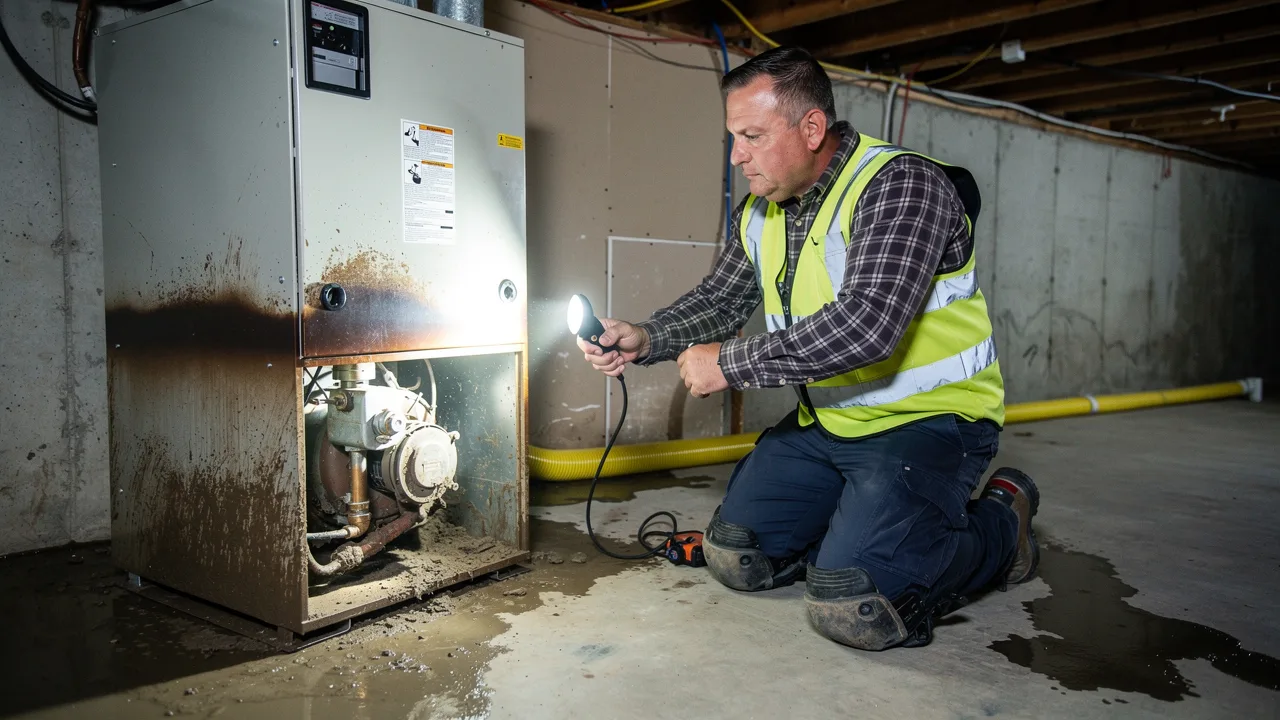
Most standard homeowner and business insurance policies completely exclude damage caused by floods and earthquakes (ready.gov). If rising surface water enters your basement and submerges the furnace burner, a standard property policy will not pay for the repairs.
Protection for these events requires a separate policy. As Ready.gov explains, basic flood insurance covers structural damage to the building, specifically including your air conditioner, furnace, and water heater, alongside associated cleanup costs (ready.gov).
Full Replacement vs. Component Repair in Claim Settlements#
Filing an insurance claim does not guarantee that the insurance company will install a completely new heating and cooling system. If a damaged HVAC component can reasonably be repaired, an insurer may opt to pay only for partial component repairs rather than replacing the entire unit (cbsnews.com).
- Inspect equipment
- Diagnose cause
- Compare repair vs replacement
- Issue claim settlement
A report by HVACi revealed that half of the HVAC and refrigeration equipment evaluated in property claims could be repaired instead of fully replaced (finance.yahoo.com). Decisions to replace rather than repair depend on whether individual parts are available, whether the damaged equipment has been discontinued, or if matching compatible components is impossible (cbsnews.com).
Once an unusual noise or a drop in airflow shows up during extreme temperatures, that is the point to bring in HVAC Services help to determine whether you face a simple component fix or a major system breakdown.
Evaluating your financial numbers before opening a claim prevents costly mistakes. If an emergency repair barely exceeds your policy deductible, filing a claim yields only a marginal payout while adding a claim to your history. You can calculate the net benefit of a potential claim using this formula:
Net Claim Payout = Estimated Repair or Replacement Cost - Policy Deductible
If the net payout is minimal, paying out of pocket for the repair often makes better long-term sense than risking policy surcharges.
Technical Diagnostic Inspections in HVAC Claims#
So they frequently rely on third-party assessment services like HVAC Investigators (ASLHI) to inspect damaged systems (hvacinvestigators.com).
Onsite diagnostic assessment reports delivered to adjusters provide key technical determinations (hvacinvestigators.com):
- Verification of the exact cause of loss
- A defined scope of damage
- Determination of whether equipment requires repair or full replacement
- A recommended settlement amount
- A repair versus replacement cost comparison
- Parts availability verification
- Current market parts and labor pricing
- Photographs of the damaged equipment
Third-party HVAC diagnostic reports protect insurers from paying for pre-existing wear while giving policyholders an objective review of whether the system can be safely restored (hvacinvestigators.com).
Managing Temporary Relocation and Claim Expenses#
When a heating or cooling failure makes a home uninhabitable during an insurance event, policyholders must track their out-of-pocket costs carefully. Ready.gov advises homeowners to keep receipts for hotel and restaurant expenses if damage requires temporary relocation (ready.gov).
Policyholders should also retain receipts for any construction or hardware supplies purchased to secure the property, along with clear photographic or video records of the initial damage before cleanup begins (ready.gov). These records substantiate your claim under the loss of use or temporary living expense provisions of your policy.
Safe Emergency Heating Methods During a System Outage#
When a furnace fails in freezing weather, keeping your family warm without creating safety hazards is critical while waiting for a technician. CDC guidelines advise keeping electric space heaters at least 3 feet away from drapes, furniture, bedding, and other flammable materials (cdc.gov). Use models equipped with automatic shut-off switches, avoid running cords under rugs, and avoid using extension cords to plug in your space heater.
Combustion heaters, wood stoves, and fireplaces should only be used if they are properly vented to the outside and do not leak flue gas or exhaust into indoor air spaces (cdc.gov). Furthermore, turning on a stove or oven to heat a home is unsafe and creates a serious fire hazard. Grills, camp stoves, or other gasoline, propane, natural gas, or charcoal-burning devices must never be used inside a home, garage, basement, crawlspace, or any partially enclosed area (fema.gov).
To conserve heat inside the house, occupants should close off unneeded rooms and stuff towels or rags into the cracks under exterior doors (cdc.gov). According to FEMA, staying warm during an outage also means prioritizing layering clothing and using multiple blankets tucked in to trap body heat (fema.gov).
What to Do Next#
- Inspect the breaker panel, thermostat batteries, and air filter to rule out simple operational issues.
- Check your homeowners insurance declarations page to confirm your deductible and see whether you have an equipment breakdown endorsement.
- Schedule an on-site evaluation with a licensed technician to identify the exact cause of failure before contacting your insurer.
- If damage stems from a storm or burst pipe, take date-stamped photos of the unit and any affected areas of your home.
When you need an accurate diagnosis or an urgent system replacement in Howell, Brighton, or Fenton, working with experienced professionals ensures your equipment is evaluated properly from day one.
| Peril or Cause of Loss | Standard Homeowners Policy | Optional Equipment Breakdown Rider | Separate Flood Insurance Policy |
|---|---|---|---|
| Sudden Covered Peril (Fire, Lightning, Hail, Falling Objects) | Covered (after deductible) | Covered (after deductible) | Not Covered |
| Mechanical Breakdown (Motor Burnout, Electrical Short) | Excluded | Covered | Not Covered |
| Gradual Wear and Tear, Aging, or Lack of Maintenance | Excluded | Excluded | Not Covered |
| Flood Waters or Mudflows | Excluded | Excluded | Covered (includes furnace, AC, water heater) |
| Earthquake Damage | Excluded | Excluded | Excluded |
| Heating Method or Device | CDC and FEMA Safety Rules | Mandatory Clearances or Ventilation Requirements |
|---|---|---|
| Electric Space Heaters | Must have automatic shut-off switches; never run cords under carpets or use extension cords | Maintain at least 3 feet of clearance from flammable materials; never cover |
| Combustion Heaters and Wood Stoves | Use only design-specified fuel; do not burn paper; service annually with a qualified technician | Must be properly vented to the outside without leaking flue or exhaust gases |
| Kitchen Stove or Oven | Never use for home heating due to severe fire hazard | Prohibited for space heating |
| Grills and Camp Stoves | Never operate inside a home, garage, basement, crawlspace, or partially enclosed area | Strictly prohibited indoors (carbon monoxide and fire risks) |
| Kerosene Heaters | Verify local legality with fire department prior to operation | Require proper continuous ventilation |
HVAC Insurance Claim & Out-of-Pocket Estimator
Calculates the estimated insurance payout and out-of-pocket costs for a covered HVAC replacement or repair, factoring in your policy deductible and whether your policy pays Replacement Cost Value (RCV) or Actual Cash Value (ACV, which depreciates based on age and lifespan).
Estimated Insurance Payout:
Your Out-of-Pocket Expense:
Claim Exceeds Deductible (1 = Yes, 0 = No):
Frequently Asked Questions
Will homeowners insurance pay for a new furnace?
Homeowners insurance covers replacement only if damage results from a listed sudden peril like fire, lightning, or a burst pipe. Gradual wear, aging, rust, and mechanical failure are not covered.
What two events are not covered under homeowners insurance?
Standard policies generally exclude damage caused by earthquakes and floods. Flood damage requires a separate flood policy, which specifically covers structural building damage including air conditioners, furnaces, and water heaters.
Does homeowners insurance cover HVAC replacement?
Homeowners insurance pays for HVAC replacement only when destroyed by sudden covered perils like fire, wind, or hail. Failures from age, lack of maintenance, or heat wave strain are excluded.
Disclaimer
This content is general information about heating, cooling, and HVAC systems and is not a substitute for an on-site diagnosis. Contact Oak Grove Heating and Cooling for advice specific to your system.
Sources
- Document and Insure Your Property - ready.gov (2020-03-20)
- Safety Guidelines: During & After a Winter Storm | Winter Weather | CDC - cdc.gov (2024-05-15)
- FAQ: How can I stay warm during a power outage? | FEMA.gov - fema.gov
- 50% of HVAC Systems Included in Claims Were Repairable - finance.yahoo.com (2026-03-24)
- Does homeowners insurance cover HVAC replacement? This is what's actually included. - CBS News - cbsnews.com (2026-07-30)
- What Does Homeowners Insurance Cover? 2026 Guide - NerdWallet - nerdwallet.com (2016-03-25)
- Does Homeowners Insurance Cover Furnace Problems? - insuranceopedia.com
- Onsite Inspections - HVAC Investigators - hvacinvestigators.com (2021-02-14)