hvac inspection services
Short answer
For HVAC inspection services, schedule a comprehensive diagnostic evaluation covering seasonal checkpoints, electrical loads, and code compliance rather than a quick visual sweep. Professional inspections typically range from $150 to $500, with most homeowners paying around $300 for a full system assessment. True equipment stewardship requires moving beyond basic visual walk-throughs to codified testing, verifying operating parameters like refrigerant charge, combustion safety, and motor performance against original manufacturer specifications.
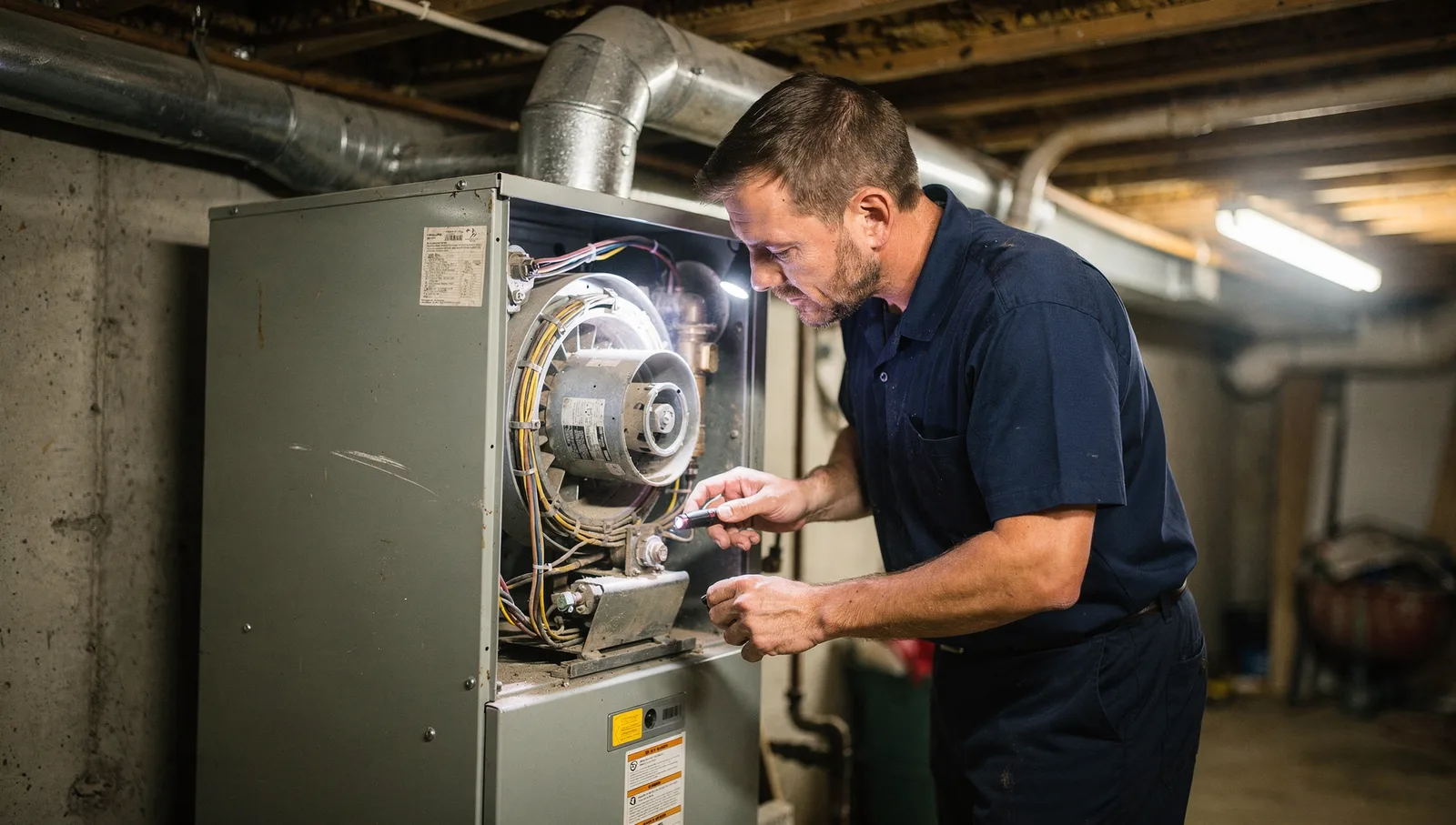
“Its intent is to address the often inconsistent practices for inspecting and maintaining HVAC systems in commercial, institutional, and other buildings where the public may be exposed to the indoor environment.”
— ASHRAE, Standards Organization
Most homeowners treat an HVAC inspection like a quick oil change, expecting a technician to swap a filter, glance at the flame, and leave. True equipment stewardship requires far more than a casual walk-through. Real preventive maintenance demands codified diagnostic testing: measuring electrical draws against manufacturer specifications, verifying thermal performance, and catching hidden safety hazards before extreme weather hits.
Core Components and Checkpoints Evaluated in an HVAC Inspection#
A complete professional HVAC inspection systematically evaluates moving parts, electrical circuits, airflow delivery, and combustion safety across specific seasonal demands. Skipping these functional measurements turns an inspection into little more than guesswork. When technicians conduct real seasonal maintenance, they follow structured checkpoints tailored to the operating conditions your equipment is about to face.
- Visual & Safety Checks
- Cleaning & Airflow
- Electrical & Diagnostic Testing
- Operational Verification
Commercial preventive maintenance checkpoints establish clear operational baselines by season:
- Spring cooling checkpoints focus on condenser coil cleaning and refrigerant charge verification (oxmaint.com).
- Fall heating checkpoints include boiler combustion analysis, heat exchanger crack inspection, glycol concentration testing, cooling tower winterization, and variable air volume (VAV) reheat coil verification.
Targeted seasonal maintenance evaluations prevent sudden mechanical breakdowns.
Commercial Inspection Tiers Under ASHRAE/ACCA Standard 180#
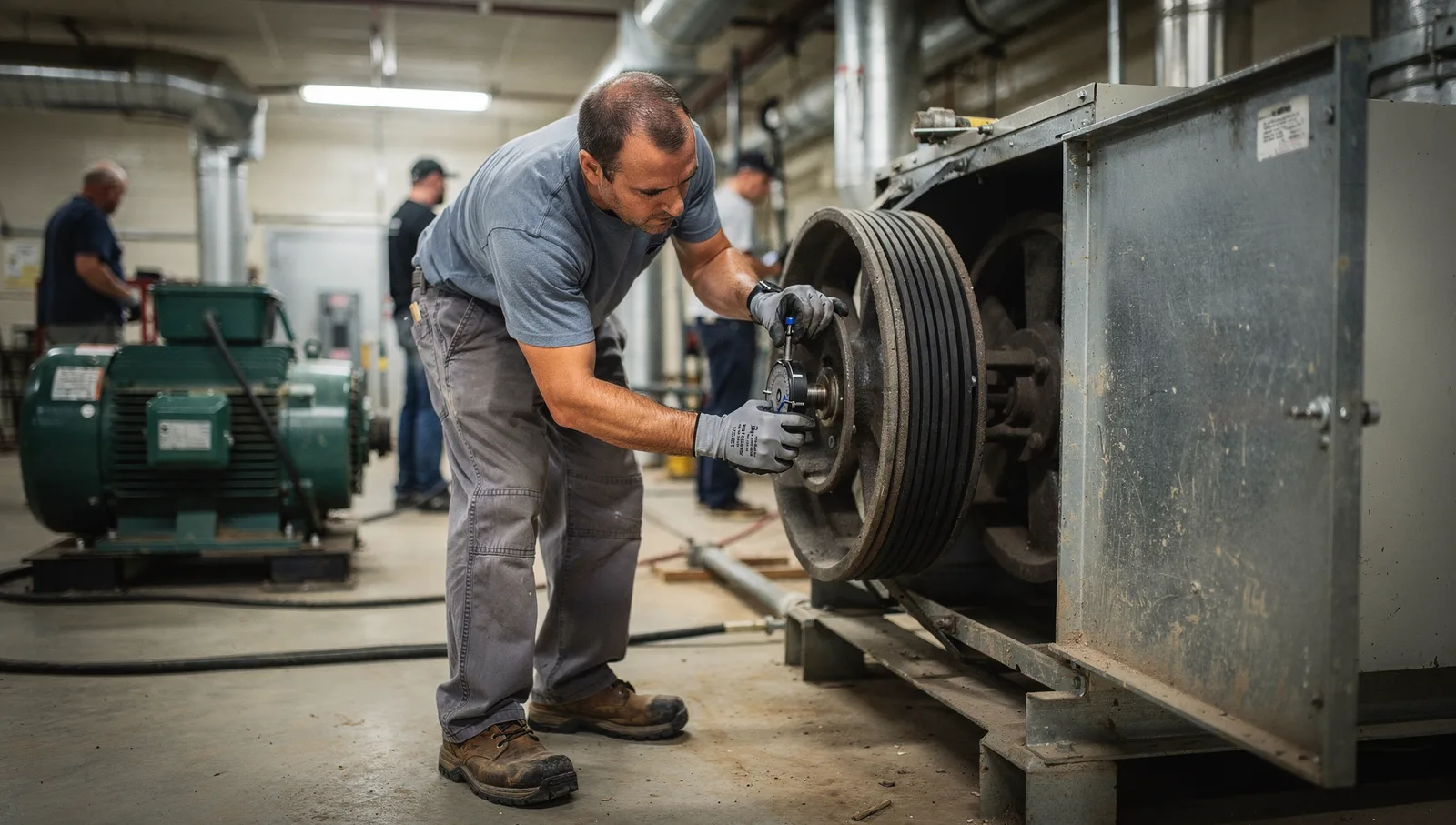
In commercial and institutional buildings where the public gathers, maintenance approaches historically ranged from rigorous upkeep to run-to-failure neglect (ashrae.org). This benchmark establishes clear structure for commercial HVAC inspections by defining three distinct program levels (hvaccomplianceauthority.com):
Each program tier establishes distinct inspection scopes, required documentation, and criteria for qualified personnel (hvaccomplianceauthority.com).
Code Compliance and Installation Permitting Across Jurisdictions#
HVAC inspections operate under a split regulatory environment where model codes, such as the International Mechanical Code (IMC) and International Energy Conservation Code (IECC), are enforced differently depending on local governance (energycodes.gov; hvaccomplianceauthority.com). While states generally enforce energy codes directly for state-owned or state-financed construction, authorized local agencies enforce adopted codes when local resources are available.
The jurisdictional division between state and local energy code enforcement creates noticeable enforcement gaps. Local building departments implement varied procedures for permit reviews and inspections, with energy code enforcement often deprioritized compared to structural, fire, electrical, plumbing, and mechanical codes (efiling.energy.ca.gov). When local agencies must simultaneously handle life safety and fire code compliance under tight budgets, resource limitations can cause energy code compliance rates to vary significantly across jurisdictions (energycodes.gov).
To bridge this resource gap, local governments can reduce the financial burden of code enforcement by using third-party plan reviews and inspections (osti.gov). Under this arrangement, builders pay review and inspection fees directly to authorized third-party professionals, while local governments retain administrative oversight.
Professional HVAC services bridge the gap between minimum code mandates and real-world system reliability, ensuring equipment performs safely regardless of local inspection constraints.
Inspection Costs, Diagnostic Fees, and Repair Versus Replacement Decisions#
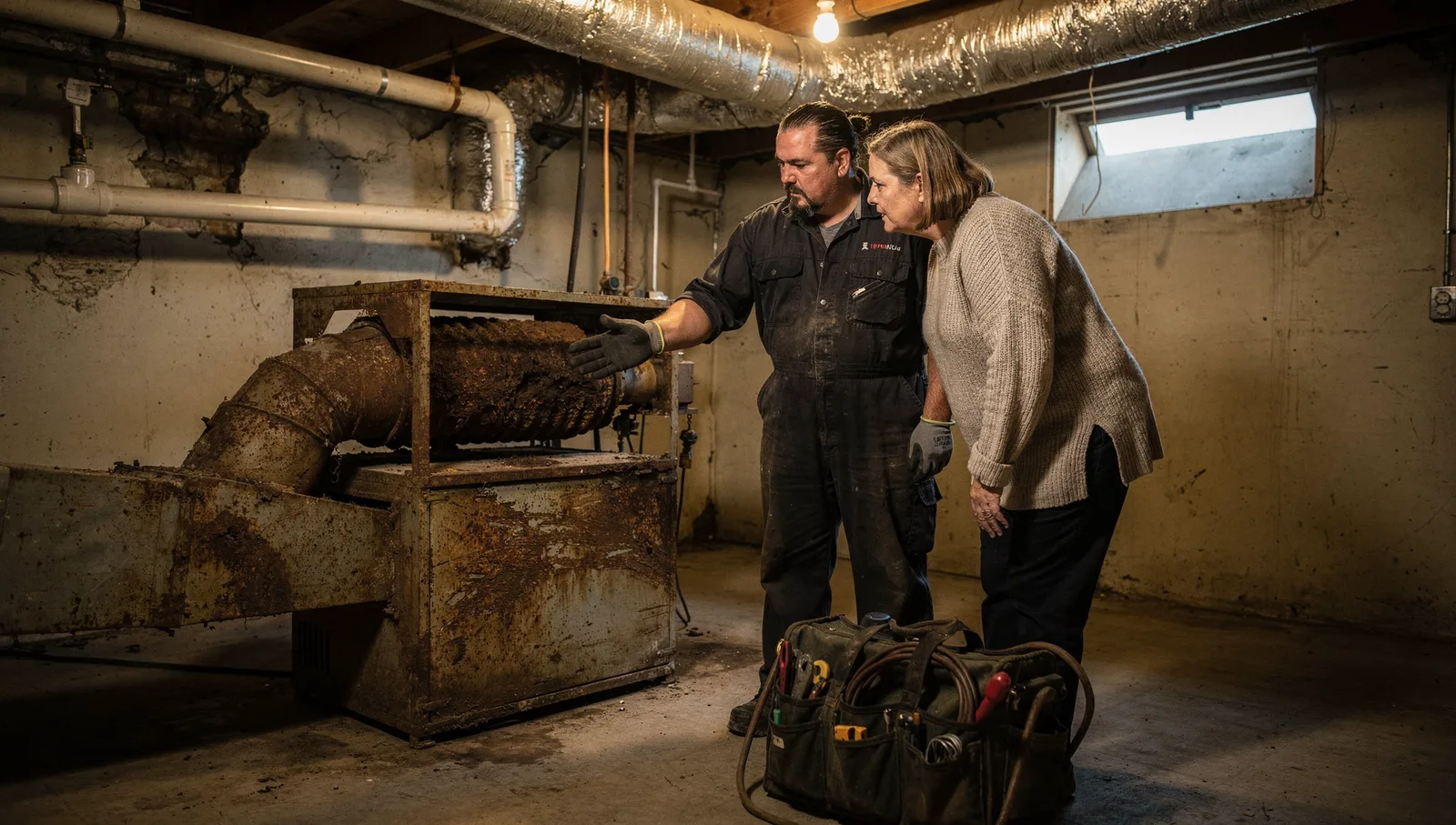
Professional residential HVAC inspection costs typically range from $150 to $500, (consumeraffairs.com) with most homeowners paying around $300 for a full system inspection. Overall pricing depends on system type, home size, unit accessibility, and seasonal demand. For example, homeowners who have solely an air conditioning system or solely a heating system pay less for an inspection than those needing an evaluation for both.
When equipment breaks down unexpectedly, service calls involve diagnostic pricing. While diagnostic visits carry an upfront charge, some HVAC companies offer a free diagnostic or waive the fee entirely if the customer moves forward with the necessary repairs (consumeraffairs.com).
HVAC systems generally have an operating lifespan of 10 to 15 years ([American Apartment Owners Association]lacement-how-to-decide-whats-best-for-your-apartment)) depending on maintenance and usage patterns ([American Apartment Owners Association]lacement-how-to-decide-whats-best-for-your-apartment)). When major failures occur, technicians and owners rely on two practical financial rules:
- The 50 Percent (american-apartment-owners-association.org) Rule: Replacement is generally more economical if repair costs exceed half the price of a brand-new system.
- The $5,000 (hvacprojectcost.com) Rule: Multiply your system’s age in years by the repair cost in dollars. If the result exceeds $5,000, replacement is generally the better financial choice.
System Age (years) × Repair Cost ($) = Evaluation Metric
To see the math in action, imagine a 12-year-old furnace facing a major draft inducer and control board repair priced at $600 (hvaccomplianceauthority.com). Multiplying the furnace's age by $600 yields a product of 7,200. Because 7,200 exceeds the 5,000 threshold, the formula indicates that sinking money into the aging unit is financially unwise compared to investing in new equipment (hvacprojectcost.com).
To take action on your system this week, schedule a professional diagnostic inspection, request your technician's written static pressure and electrical amp draw readings, and apply these financial rules to any suggested repairs.
| Season | Focus Areas | Primary Risk Prevented |
|---|---|---|
| Spring (Pre-Cooling) | Condenser coil cleaning and refrigerant charge verification | Compressor failure and capacity loss under high operating pressure |
| Fall (Pre-Heating) | Boiler combustion analysis, heat exchanger crack inspection, glycol concentration testing, cooling tower winterization, and VAV reheat coil verification | No-heat failures, combustion gas leaks, and hydronic loop freezing |
| Decision Rule | Evaluation Formula / Threshold | Guideline Outcome |
|---|---|---|
| 50 Percent Rule | Repair cost > 50% of new system cost | Replace system if repair bill exceeds half the replacement expense |
| $5,000 Rule | System age (years) × Repair cost ($) > 5,000 | Replace system if calculated score exceeds 5,000 |
| Lifespan Expectancy | Nearing or exceeding 10 to 15 years | Consider replacement, especially alongside frequent breakdowns or climbing utility costs |
HVAC Repair vs. Replacement Decision Calculator
When an HVAC inspection reveals costly diagnostic findings or failing components, homeowners and facility managers commonly apply the industry-standard '$5,000 Rule' (multiplying the repair quote by system age) alongside replacement cost comparisons to determine whether repair or total system replacement makes financial sense.
Repair Score ($5,000 Rule Metric):
Benchmark Threshold:
Replace Recommendation (1 = Replace, 0 = Repair):
Frequently Asked Questions
What does an HVAC inspection include under commercial standards?
Standard 180 defines three distinct levels: Level I covers basic visual inspection, Level II covers operational performance verification within design ranges, and Level III requires specialized personnel to conduct comprehensive diagnostic testing and performance evaluation.
How much does an HVAC diagnostic fee cost?
When an unexpected breakdown occurs, some HVAC service companies provide a free diagnostic visit or waive the diagnostic fee entirely if you proceed with the recommended repair work.
What is the $5000 rule for HVAC systems?
The $5,000, rule multiplies your HVAC system's age in years by the estimated repair cost in dollars. If the total exceeds $5,000, replacing the equipment is generally recommended over paying for repairs.
Disclaimer
This content is general information about heating, cooling, and HVAC systems and is not a substitute for an on-site diagnosis. Contact Oak Grove Heating and Cooling for advice specific to your system.
Sources
- Key Performance Indicators to Track Energy Code ... - Efiling (2026-10-01)
- The Cost of Enforcing Building Energy Codes: Phase 1 - Osti (2013-04-01)
- Resource Guide - Energycodes (2026-10-01)
- [PDF] ANSI/ASHRAE/ACCA Standard 180-2018 - Ashrae (2018-06-11)
- HVAC inspections typically cost between $150 and $500 - Consumeraffairs (2026-10-01)
- Commercial HVAC Preventive Maintenance Checklist by Season and Equipment Type - Oxmaint (2026-10-01)
- HVAC Repairs Vs. Replacement: How To Decide What’s Best For Your Apartment - AAOA - American Apartment Owners Association (2026-10-01)
- Repair vs. Replace HVAC: The Decision Framework & Cost Comparison - Hvacprojectcost (2026-10-01)
- HVAC Systems Inspection Standards - Hvaccomplianceauthority (2026-09-13)